
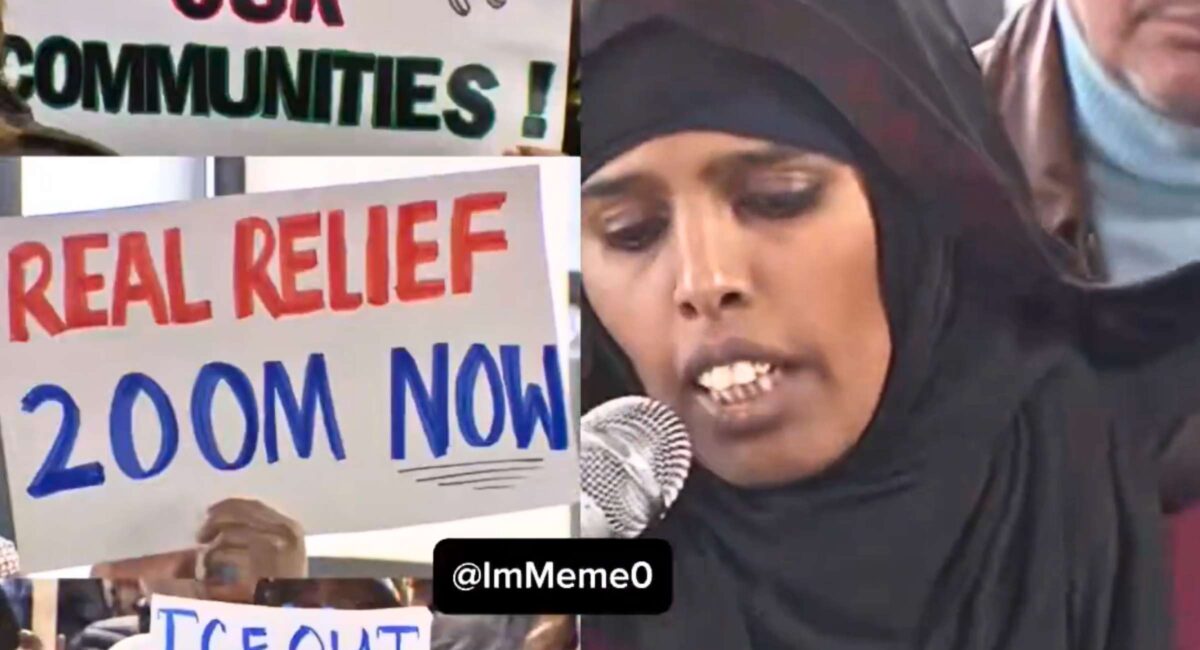
The Somali community in Minneapolis — one of the largest Somali diaspora populations in the United States — has mobilized leaders, activists, business owners, and local officials to demand roughly $200 million in federal reparations and compensation for the devastating impact of “Operation Metro Surge.” What began as a federal immigration enforcement campaign has, according to leaders and data emerging in February 2026, translated into deep economic losses, widespread trauma, shuttered businesses, and psychological distress across immigrant neighborhoods.
Key Points at a Glance
- $203 million+ in estimated economic loss from enforcement impact on Minneapolis.
- Somali community — largely U.S. citizens — faced widespread fear, business disruptions, and psychological distress.
- Local leaders and activists demand federal reparations and compensation.
- Legal challenges allege racial profiling and civil rights violations.
- Community resilience and mutual aid networks have grown.
Background: Operation Metro Surge and Minneapolis
Since late 2025, Minnesota’s Twin Cities metro area — especially Minneapolis and St. Paul — became a focal point for a substantial federal immigration enforcement initiative dubbed Operation Metro Surge. Thousands of Immigration and Customs Enforcement (ICE) agents were deployed, provoking significant local resistance and community alarm.
The operation, led by federal authorities, was officially framed as an effort to arrest and deport undocumented immigrants and criminal offenders. However, local authorities and community organizations have accused ICE of aggressive, broad enforcement tactics that extended beyond criminal suspects, affecting U.S. citizens, families, and long-standing Somali residents.
Federal officials reported some arrests (including a mix of nationalities) in early December 2025 as part of these operations — though critics note the numbers were far fewer than the overall reported disruption suggested.
The scale of the operation and its fallout has become a point of national debate.
Who Are Minneapolis’s Somali Community?
The Twin Cities area is home to one of the largest Somali populations outside of Africa — with hundreds of thousands of Somali-Americans residing in Minnesota, many of whom are U.S. citizens.
This community has deep roots in the region dating back to the early 1990s when many Somali refugees resettled following civil war and state collapse back home. Over decades, Somalis became vital contributors to Minnesota’s cultural fabric, entrepreneurship, politics (including the election of Congresswoman Ilhan Omar), and local economy.
But the recent federal enforcement surge has struck at the heart of daily life — leading to fear, disrupted routines, and economic hardship.
Economic Impact: $203 Million in Measurable Losses
City officials and community advocates released preliminary impact assessments estimating the total economic disruption caused by Operation Metro Surge at approximately $203 million. This figure reflects:
- Lost business revenue
- Wage losses for hourly workers
- Costs related to emergency response
- Reduced economic activity in immigrant-run enterprises
These numbers are underscored by reports of Somali-owned businesses temporarily closing or operating under extreme duress, especially in key community hubs like Karmel Mall — Minneapolis’s largest Somali shopping center — which have seen dramatically fewer customers due to fear of enforcement activity.
For many owners, day-to-day operations came to a halt not because of legal impoundments but because residents were too afraid to leave their homes, attend work, or serve customers amid the heavy federal presence.
Trauma and Emotional Distress: More Than Dollars
The impacts stretch well beyond economic losses.
Residents and activists emphasize that psychological trauma and social destabilization — particularly among children, families, and long-time residents — are central to their calls for reparations.
Several community leaders pointed out that random stops, ID checks, and the visible presence of federal agents in neighborhoods created a pervasive climate of fear — even for people with legal status or U.S. citizenship.
Nonprofits and grassroots groups increased humanitarian efforts during the height of the enforcement activities, from distributing culturally specific food (like sambusa and halal meals) to ensuring families could access legal assistance, childcare support, and emergency food provisions — showing how deeply the community felt the effects.
Political Pressure and Demand for Reparations
Minnesota’s senior elected officials, including Governor Tim Walz and Minneapolis Mayor Jacob Frey, have taken a strong public stance, demanding that the federal government pay for the extreme disruption caused by the ICE operation rather than deflect blame or dismiss the costs borne by local people and services.
Although differing reports vary on specific dollar figures — with some local proposals centered around hundreds of millions of dollars and others circulating higher estimates — the central contention is consistent: Minnesota should not bear the full burden of recovery when federal enforcement activities created much of the disruption.
At a press gathering near Karmel Mall, organizations like Neighbors United — comprising Somali residents and allied advocates — publicly articulated demands for “justice and real relief,” calling for expanded emergency assistance for small immigrant-owned businesses, housing subsidies, and direct grants to families impacted economically and emotionally by the enforcement wave.
These demands include, for example, support for immigrant, Black, and brown small businesses with less than $200,000 in annual revenue to help them weather losses tied to the enforcement activities.
Legal and Civil Rights Claims
In parallel, legal actions are moving through courts, including lawsuits alleging racial profiling by immigration agents — asserting that Somali and Latino residents were stopped or questioned based on ethnicity and appearance rather than objective criteria.
Whether these suits will yield liability findings or influence future policy remains an open question — but they underscore the legal dimension of the broader dispute.
Community Response: Resilience and Solidarity
Central Minnesota Muslim and Somali-American organizations responded to the enforcement surge with community solidarity initiatives. Examples include:
- Mutual aid food distribution
- Rights education clinics
- Volunteer support networks for families in need
This grassroots resilience not only provided essential services but also helped knit interracial coalitions supporting immigrant neighbors — from Somali cultural groups to broader networks in the Twin Cities.
While the emotional toll has been profound, many community organisers see these solidarity efforts as a form of collective healing and resistance.
Experts Weigh In: What Reparations Could Entail
Reparations in this context are not just symbolic. They could include:
- Direct financial assistance to small businesses
- Mental health support programs for families and children
- Compensation for lost wages
- Housing relief to prevent evictions
- Community rebuilding grants
Local economists and advocates emphasize that a comprehensive reparations plan would need to be collaborative, involving city, state, and federal resources — particularly if significant federal agencies like ICE are implicated in harm.
Immigration, Compliance, and Federal Policy
Operation Metro Surge has sparked national discourse about the appropriate use of federal enforcement power and the balance between immigration law, civil liberties, and community safety.
Critics argue that the approach taken was not tailored to individual criminal violations but indiscriminately affected entire neighborhoods — leading to civil liberties concerns, economic harm, and lasting trauma.
Proponents of strict enforcement, on the other hand, emphasize the agency’s mandate to remove undocumented individuals with criminal backgrounds — though data suggests the number of Somali citizens affected has been limited relative to the size of the community.
Conclusion — What Comes Next
The Minneapolis Somali community’s demand for reparations following Operation Metro Surge is a multi-layered struggle — grounded in economics, civil rights, community resilience, and political accountability.
Whether federal authorities will commit to direct reparations — and if so, how those funds might be structured and distributed — remains unresolved. But what’s clear from the Minnesota experience is this:
When federal enforcement intersects with long-established immigrant communities, the consequences extend far beyond arrests and detention. They ripple through economics, daily life, psychological well-being, and civic trust — all of which must be recognized in debates over accountability and policy reform.


Over decades, Somalis became vital contributors to Minnesota’s cultural fabric, entrepreneurship, politics, yeah right, they did,d and it only costs taxpayers $30 billion.