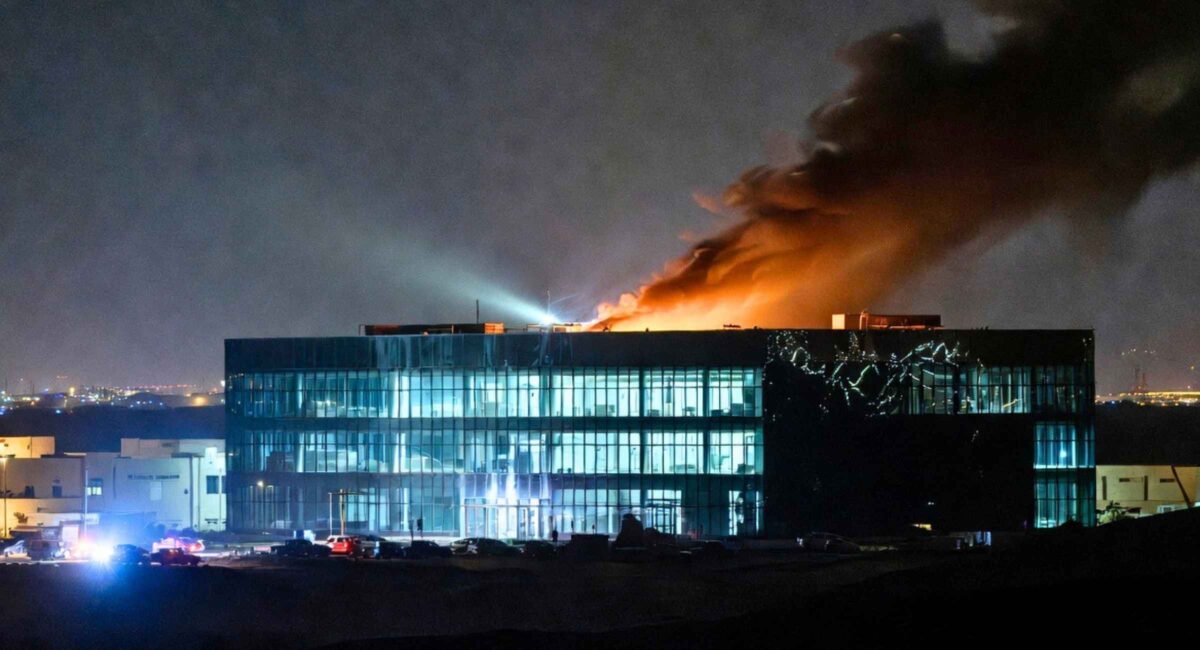
The Iranian strike damages Amazon AWS cloud infrastructure story is now partially confirmed—but with critical caveats. As of April 2026, a facility in Bahrain linked to Amazon Web Services (AWS) was damaged following an Iranian strike, triggering a fire and disrupting regional cloud operations, according to multiple verified reports. However, official confirmation from Amazon remains limited, and the full extent of damage is still unclear.
This incident marks a significant escalation: for the first time, major commercial cloud infrastructure—used by governments, banks, and businesses—is being directly affected by geopolitical conflict.
What Happened in Bahrain — The Verified Facts
Here’s what can be confirmed based on cross-checked reporting:
- A strike hit a facility associated with Bahrain Telecommunications Company (Batelco) in Hamala
- The site supports AWS cloud infrastructure in the region
- Bahrain’s Interior Ministry confirmed:
- A fire broke out following “Iranian aggression”
- Emergency teams were deployed to contain the situation
At the same time:
- Reports indicate physical damage to infrastructure
- AWS services in Bahrain experienced disruption or degraded performance
One key detail stands out (and it’s important):
Authorities did not officially name Amazon in their statements—but multiple credible reports link the damaged facility to AWS operations.
Why This AWS Facility Matters More Than It Looks
To understand the impact, you need to understand what this site actually does.
AWS’s Bahrain region (launched in 2019) is:
- The first AWS cloud region in the Middle East
- Built with three Availability Zones
- Designed to serve:
- Governments
- Banks
- Airlines
- E-commerce platforms
In practical terms, it’s not just “servers in a building.”
It’s part of the digital backbone of the Gulf economy.
And here’s the critical nuance (often missed in headlines):
AWS doesn’t operate in isolation—it relies heavily on local telecom partners like Batelco for connectivity.
So when Batelco is hit, you’re not just damaging a building—you’re cutting the network arteries that feed cloud systems.
Not the First Attack — A Pattern of Escalation
This strike didn’t happen in isolation. It’s part of a clear escalation pattern.
Earlier Incidents (March 2026)
- Iranian drones hit:
- Two AWS data centers in the UAE
- One facility in Bahrain
- Result:
- Power outages
- Fire damage
- Service disruptions across the region
Continued Disruptions
- AWS confirmed:
- Ongoing service instability in Bahrain
- Customers advised to migrate workloads to other regions
April 2026 Strike — A New Phase
What’s different this time?
- The strike followed explicit threats from Iran’s Islamic Revolutionary Guard Corps (IRGC)
- It targeted support infrastructure (telecom + cloud), not just physical data centers
- It suggests a more strategic understanding of digital infrastructure dependencies
From a defense and infrastructure perspective, this is a shift from:
“hitting targets” → to → “disrupting systems.”
Iran’s Warning to US Tech — A Turning Point
Just days before the strike:
- Iran’s IRGC warned it could target US technology companies in the Middle East
- Companies mentioned included:
- Amazon
- Microsoft
- Apple
The reasoning (according to Iranian messaging):
- Tech infrastructure supports:
- Surveillance
- Military logistics
- Intelligence systems
Whether that claim holds or not is secondary.
What matters is this:
Commercial tech infrastructure is now being framed as a legitimate wartime target.
That’s a major shift.
What This Means for Businesses and the Global Economy
From experience covering cloud infrastructure outages, one thing is always underestimated:
Cloud disruption doesn’t stay local.
Immediate Impact
- Regional AWS services:
- Slower response times
- Partial outages
- Companies relying on Bahrain region face:
- Downtime
- Data latency issues
- Failover challenges
Ripple Effects
Even a localized disruption can affect:
- Banking apps
- Airline booking systems
- E-commerce platforms
Why?
Because modern systems rely on:
- Interconnected cloud environments
- Shared infrastructure layers
As one analyst put it, cloud outages create a “single point of impact” across multiple industries
Strategic Risk — The Bigger Concern
This is the real story.
If cloud infrastructure becomes a target:
- Companies may need to rethink regional deployments
- Governments may push for data localization and redundancy
- Cloud providers could face new security and insurance challenges
In short:
The rules of digital infrastructure are changing in real time.
What AWS Has Said (And Not Said)
Amazon’s response has been cautious.
Confirmed:
- Service disruptions in Bahrain
- Ongoing support for customer migration
Not confirmed:
- Direct acknowledgment of a missile strike
- Full extent of damage
- Timeline for full recovery
That silence isn’t unusual.
From past incidents, companies often wait for:
- Security clearance
- Government coordination
- Damage assessment
before making detailed statements.
Final Analysis: A New Kind of Battlefield
The Iranian strike damages Amazon AWS cloud story isn’t just about one facility in Bahrain.
It signals something much bigger.
We’re entering a phase where:
- Data centers
- Telecom hubs
- Cloud networks
…are no longer “neutral infrastructure.”
They’re becoming part of the battlefield.
And that has consequences.
Not just for governments—but for:
- Businesses
- Financial systems
- Everyday digital services
Here’s the blunt takeaway:
If cloud infrastructure can be targeted, then the modern economy—built on that infrastructure—is no longer insulated from conflict.
That’s not a future risk.
It’s already happening.