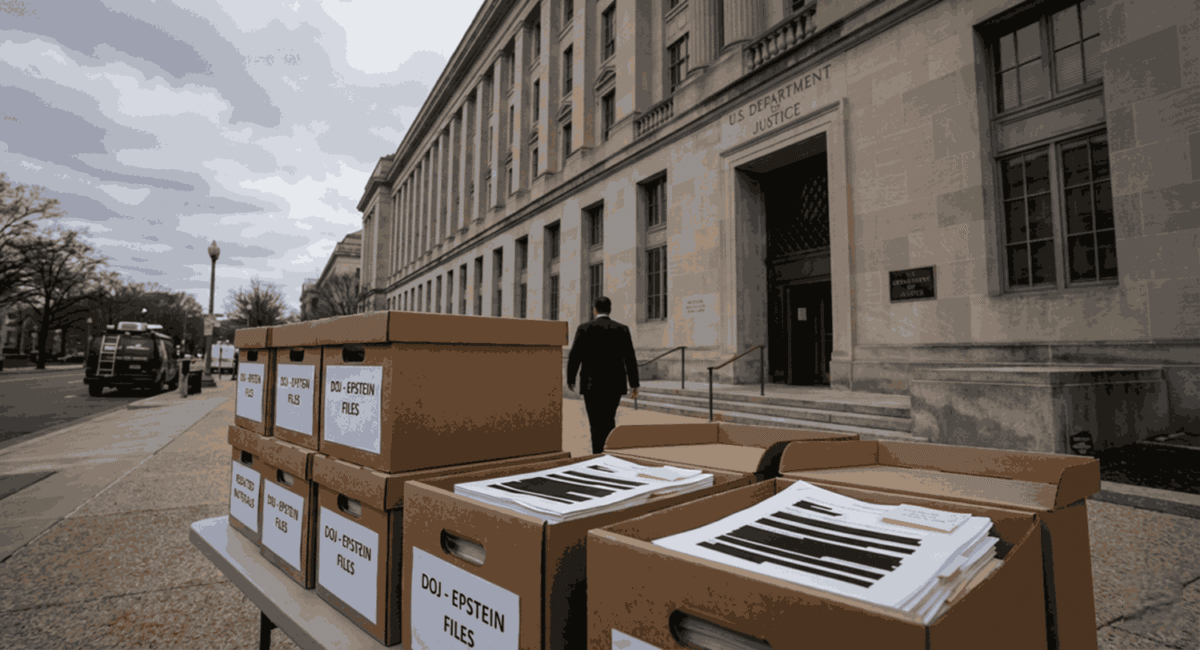
In early February 2026, the U.S. Department of Justice (DOJ) withdrew several thousand Epstein-related documents from its public repository after widespread redaction failures exposed the names and personal information of dozens of victims — even after years of advocacy and legal protections under the newly enacted Epstein Files Transparency Act. Survivors, lawmakers, and legal experts have blasted the department for both violating the law’s intent and failing to safeguard vulnerable people, leading to urgent court agreements and calls for full compliance.
Why This Story Matters Now
This controversy isn’t old news or academic. It’s unfolding in real time.
The Epstein Files Transparency Act (H.R. 4405), passed by Congress and signed into law in 2025, was designed to force the Justice Department to make millions of federal records related to Jeffrey Epstein’s crimes publicly searchable and downloadable — including investigative materials, communications, and flight logs — subject only to legally justified redactions.
That deadline has long passed. But the implementation has generated far more heat than light — and current events show why:
- The DOJ’s public site published records with unredacted victim names, contact details, and other sensitive information.
- After public outcry and legal pressure, the department removed thousands of those documents to fix redaction errors.
- A federal judge and victims’ lawyers reached an agreement to better protect identities going forward.
- Independent reviews (e.g., Wall Street Journal) verified that at least dozens of victim names were left unredacted.
This isn’t a minor procedural glitch; it’s at the heart of intense legal, political, and human rights debates in 2026.
What the Epstein Files Transparency Act Actually Requires
1. Mandatory Release of Federal Records
The law explicitly directs the DOJ to publish all unclassified, non-privileged federal documents related to the Epstein investigation. That includes:
- Investigative files
- Communications involving Epstein
- Flight logs and travel records
- Materials related to Ghislaine Maxwell
- Names of individuals referenced in the documents
There’s no legal penalty for missing the deadline — but ignoring key provisions can still invite legal and political consequences.
2. Restrictions and Redactions Allowed Only for Legal Protections
Victims’ personal data and details that could jeopardize ongoing prosecutions may be redacted — but such redactions must be documented and justified. Crucially, the act’s text requires that redaction decisions and their legal basis must be reported to Congress.
Timeline: From Release to Fallout
December 19, 2025: DOJ Drops Initial Files
After the legal deadline, the DOJ published a large tranche of files — but critics complained they were overly redacted and missing key materials.
Early February 2026: Redaction Failures Reported
Independent reporting and watchdog reviews found that names of victims — including minors — appeared unredacted in the documents. These details weren’t just present in internal files; they were searchable via the public portal, exposing survivors to harassment and risk.
February 2–3, 2026: DOJ Pulls Files from Public Access
Facing mounting legal pressure, the Justice Department removed thousands of documents after attorneys for survivors flagged them for revealing personal information.
Federal Court Agreement Reached
A federal judge and lawyers for Epstein’s victims reached an arrangement intended to bring the DOJ into compliance and ensure better identity protection moving forward.
What Went Wrong — Deeply Verified Problems
Poor Redaction Quality
The failures weren’t trivial or isolated:
- Full names of victims appeared intact in many documents.
- Some highly sensitive data — including banking and contact information — remained visible until flagged by victims.
Lawyers for survivors said the scale of failures was life-threatening — with some victims reporting death threats, harassment, and financial risk.
DOJ Possibly Missed Statutory Requirements
Beyond protection failures, watchdogs noted that the DOJ had not met all reporting requirements to Congress on redactions, as mandated, raising additional legal compliance questions.
Transparency vs. Privacy Conflict
The law’s intent was to maximize transparency of historic government documents — but the DOJ’s approach seemingly tilted more toward retaining privacy for alleged enablers while compromising victim anonymity, a reversal many advocates find unacceptable.
Voices from Survivors and Advocates
Survivors collectively condemned the DOJ’s actions:
They called the release incomplete and traumatic, stressing that exposing their identities while shielding powerful figures was “outrageous.” — Joint statement from survivor representatives.
Lawmakers from both parties have echoed frustration over:
- the late release,
- the hidden materials, and
- the nature of the redactions.
Political and Public Reaction
This controversy has ballooned beyond legal filings:
Lawmakers Press for Accountability
Some members of Congress are investigating whether the DOJ violated not just the intent but the letter of the Transparency Act.
Media and Editorial Backlash
Major outlets have editorialized about the process, questioning whether the law has been applied fairly or selectively.
Public Figures Weigh In
Late-night TV hosts and public commentators have criticized the Justice Department’s handling, adding cultural friction to an already complex legal issue.
What Happens Next — Verified Projections
1. Corrected Redactions and Re-Publishing
The DOJ says its goal is to re-post the removed files after proper redaction within about 24–36 hours after being flagged.
2. Ongoing Legal Oversight
Federal judges and survivors’ attorneys are engaged to ensure the remaining files are published in compliance with both privacy protections and transparency requirements.
3. Potential Oversight Hearings
Congress may use oversight and reporting requirements to press the DOJ for deeper explanations — beyond redaction mechanics — about withheld documents.
Conclusion: Transparency Rendered Incomplete
What was meant to be one of the most consequential releases of legal documents in recent memory — shedding light on Epstein’s network — has instead become a case study in transparency law, victim privacy, and institutional failure.
The Epstein Files Transparency Act aimed to remove obfuscation around one of the worst abuse cases of the 21st century. Yet the 2026 fallout reveals a justice system caught between legal mandate and operational weakness, putting victims in harm’s way even as it broadcasts the government’s investigative history.
Judicial agreements and ongoing revisions may eventually bring this project closer to compliance. But the headlines — from exposed identities to legislative outrage — are a clear reminder that mandates without meticulous execution can hurt the very people they were designed to protect.