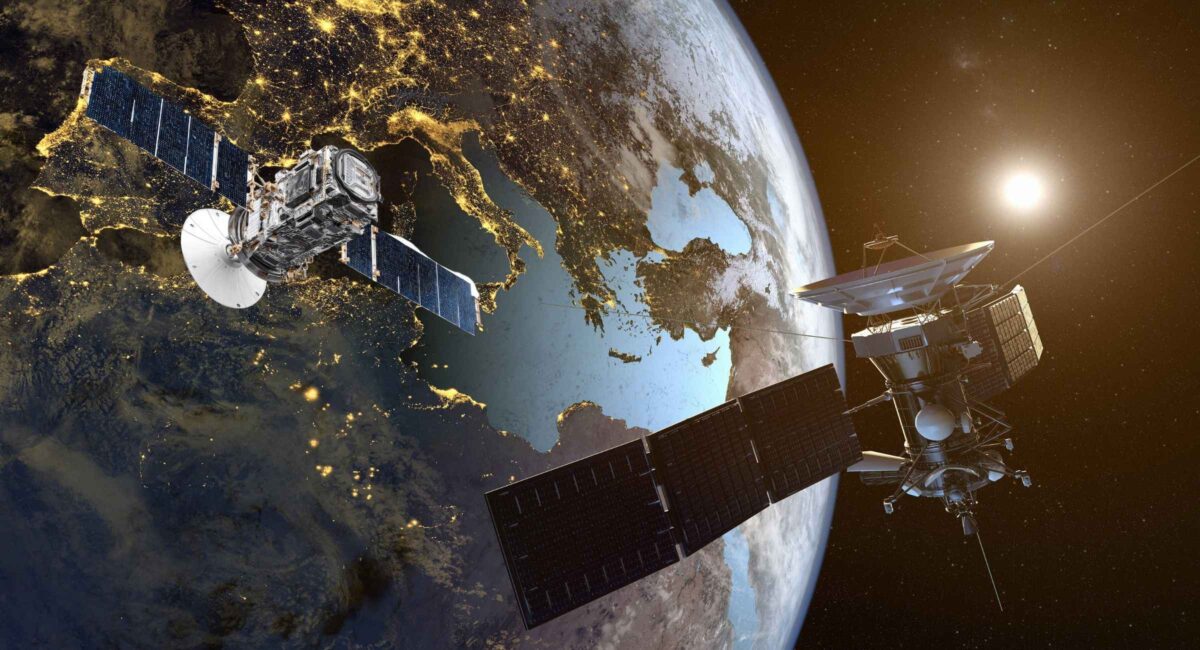
What Happened to the NASA Satellite?
The NASA Satellite known as Van Allen Probe A re-entered Earth’s atmosphere at 6:37 a.m. EDT on March 11, 2026, nearly 14 years after its launch in August 2012. According to official mission updates, the spacecraft burned up largely during atmospheric re-entry and descended over the eastern Pacific Ocean near 2° south latitude and 255.3° east longitude, meaning any surviving fragments almost certainly fell into remote ocean waters rather than populated land areas.
The spacecraft weighed about 600 kilograms (1,323 pounds) and had been inactive since 2019 after completing its scientific mission studying Earth’s radiation belts. While some components may have survived the intense heat of re-entry, NASA assessed the risk to people on Earth at roughly 1 in 4,200, which experts consider extremely low.
The Mission Behind the NASA Satellite
A Spacecraft Built to Explore Earth’s Radiation Belts
The satellite that ultimately burned up this week wasn’t just another piece of orbital debris. Van Allen Probe A was one half of a pioneering two-satellite mission designed to explore one of the most dangerous regions of near-Earth space: the Van Allen radiation belts.
These belts are zones of highly charged particles trapped by Earth’s magnetic field. They matter more than most people realize. Radiation storms in these regions can disrupt satellites, damage electronics, and pose risks to astronauts.
Launched on August 30, 2012, Van Allen Probe A and its twin spacecraft, Probe B, were built and operated by the Johns Hopkins University Applied Physics Laboratory for NASA. Their mission originally carried a modest expectation: two years of data collection.
Instead, they delivered nearly seven years of high-value observations before being retired in 2019.
From my perspective covering aerospace missions, this is one of the quiet success stories of modern space science—missions that exceed expectations but rarely make headlines until their final descent.
Why the Satellite Fell Earlier Than Expected
Originally, NASA predicted Van Allen Probe A would remain in orbit until around 2034. Yet it returned to Earth eight years earlier than those forecasts.
The culprit? Solar activity.
Solar Maximum Changed the Equation
During the current solar cycle, the Sun reached a particularly active phase known as solar maximum. Increased solar storms heat and expand Earth’s upper atmosphere, which increases atmospheric drag on satellites in low orbit.
That drag slowly reduces orbital altitude. Over time, gravity wins.
NASA scientists confirmed that intensified solar activity during the mid-2020s accelerated the orbital decay of the satellite, ultimately triggering its earlier re-entry.
This phenomenon is well known in orbital mechanics, but predicting its exact timing is notoriously tricky—something every satellite operator wrestles with.
What Happened During the Re-entry
The Physics of a Satellite Burning Up
When a spacecraft re-enters Earth’s atmosphere, it’s traveling at roughly 17,000 miles per hour (about 27,000 km/h).
At that speed, atmospheric friction becomes extreme.
Within seconds:
- Temperatures climb above 1,500°C (2,700°F)
- Structural components begin to melt or fragment
- Most of the spacecraft vaporizes before reaching lower altitudes
For Van Allen Probe A, NASA expected exactly that outcome—and the prediction proved accurate.
Did Any Debris Survive?
Some pieces of a satellite often survive re-entry. Dense components such as:
- titanium tanks
- steel brackets
- propulsion hardware
can sometimes reach Earth’s surface.
In this case, however, any surviving fragments fell into the eastern Pacific Ocean, one of the most sparsely traveled regions on the planet.
That’s good news—not only for safety but also for tracking debris.
How Dangerous Was the NASA Satellite Re-entry?
Let’s address the question people always ask when a satellite falls from orbit:
Could it hit someone?
Technically yes. Realistically, almost never.
NASA estimated the probability of the Van Allen Probe A causing injury at 1 in 4,200.
That sounds alarming until you compare it to everyday risks.
For context:
- Lightning strikes people globally every year
- Falling space debris injuries are extremely rare
- Only one confirmed case exists—a woman lightly struck by a fragment in 1997
Even that incident caused no injury.
With 71% of Earth covered by ocean and large portions of land sparsely populated, most uncontrolled re-entries end exactly like this one—over open water.
What the Van Allen Probes Discovered
The mission itself produced some remarkable science.
Among the key discoveries:
1. A Temporary Third Radiation Belt
Scientists discovered that under certain solar storm conditions, a third radiation belt can form temporarily around Earth—something never observed before.
2. Understanding Space Weather
Data from the probes improved forecasting models for space weather events that can disrupt satellites, GPS systems, and power grids.
3. Radiation Protection for Future Missions
The mission helped engineers design better shielding for spacecraft and astronauts, particularly for deep-space missions.
Those findings remain relevant today as agencies plan missions to the Moon, Mars, and beyond.
What Happens to the Twin Satellite?
Van Allen Probe A had a twin spacecraft—Van Allen Probe B.
Unlike its sibling, Probe B is expected to remain in orbit until at least the early 2030s, though the exact timeline depends on solar activity and atmospheric drag.
Eventually, it too will return to Earth.
That’s the lifecycle of nearly every satellite ever launched.
The Bigger Issue: Growing Space Debris
The re-entry also highlights a growing concern in the space industry.
Thousands of satellites now orbit Earth. Mega-constellations from companies like SpaceX and other operators are increasing the number dramatically.
While most satellites are designed to burn up safely during re-entry, uncontrolled descents remain a challenge.
Experts estimate that several large objects re-enter Earth’s atmosphere every month, though most go unnoticed.
The difference today is scale: humanity is launching more spacecraft than at any time in history.
Final Verdict: A Dramatic End to a Quietly Important NASA Satellite
The fiery return of Van Allen Probe A marks the end of one of NASA’s most productive space-weather missions.
After nearly 14 years circling Earth, the spacecraft did exactly what engineers expected: it burned up high above the Pacific Ocean with minimal risk to anyone on the ground.
But its scientific legacy continues.
The data collected by this modest 600-kilogram satellite is still shaping how scientists understand Earth’s radiation environment, solar storms, and the fragile technologies orbiting our planet.
In other words, even though the satellite itself is gone, the knowledge it generated will guide space missions for decades.