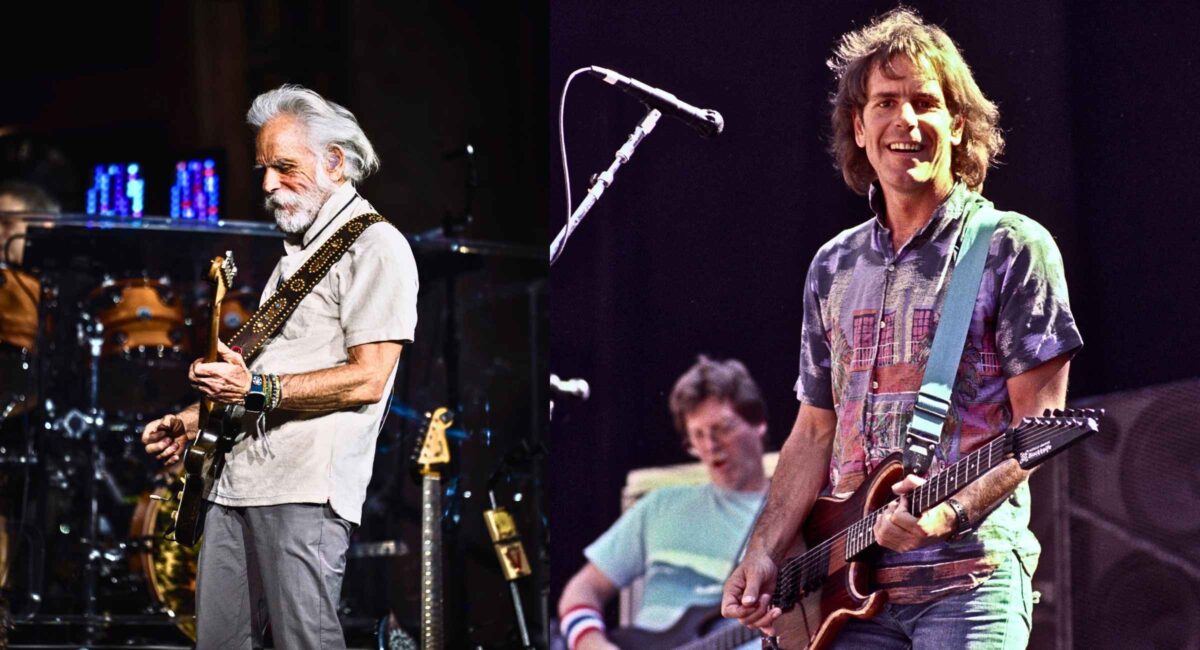
Bob Weir, the legendary co-founder, rhythm guitarist and vocalist of the Grateful Dead, has died at the age of 78, his family announced on January 10, 2026. According to a statement shared on his official Instagram account, Weir “transitioned peacefully, surrounded by loved ones” after a long career and a recent battle with serious illness — including a cancer diagnosis in July 2025 and subsequent underlying lung issues that ultimately claimed his life.
From the early days of the San Francisco rock scene in the 1960s through decades of touring, songwriting and community building, Weir’s impact on American music was profound. His work — from rhythm guitar wizardry to timeless vocals on songs like “Sugar Magnolia” and “Truckin’” — helped shape not only the Grateful Dead’s sound but also an entire musical culture that still resonates with millions of fans worldwide.
Weir’s Final Chapter: Cancer, Lung Issues, and Peaceful Passing
In a heartfelt message shared by his family, Weir’s passing was described with equal parts sorrow and appreciation for a life fully lived. “It is with profound sadness that we share the passing of Bobby Weir,” the Instagram post began, noting he had “courageously beaten cancer as only Bobby could” before ultimately succumbing to underlying lung issues.
Weir’s cancer diagnosis in July 2025 came amidst a period of celebration and reflection: in August 2025, he performed with Dead & Company during a sold-out, three-night commemoration of the Grateful Dead’s 60th anniversary at Golden Gate Park in San Francisco. Those performances, emotionally charged and joyous in spirit, became his final major public appearances.
The family’s statement emphasized that Weir’s transition was peaceful — a detail shared not out of spectacle, but out of respect for a musician who often spoke of community, connection and the shared experience of music. The post requested privacy for his loved ones while acknowledging the outpouring of support from fans and fellow artists.
A Life in Music: From San Francisco Teen to Rock Icon
Born Robert Hall Weir on October 16, 1947, in San Francisco, he was adopted and raised in Atherton, California. At just 17 years old, Weir joined forces with Jerry Garcia, Phil Lesh, Bill Kreutzmann and Ron “Pigpen” McKernan to form what would become the Grateful Dead — after evolving from earlier incarnations like the Warlocks and Mother McCree’s Uptown Jug Champions.
Weir’s unique rhythm guitar techniques, which blended elements of rock, blues, folk and improvisational play, became a cornerstone of the Dead’s sound. Where many guitarists serve purely as timekeepers or soloists, Weir developed a “counter-lead” approach — his chords and lines weaving in and out of Garcia’s leads in unpredictable, soulful ways. This creative voice helped forge the band’s reputation for marathon live shows and endlessly mutable setlists that became central to the Deadhead subculture.
Unlike many rock acts defined by studio hits, the Grateful Dead’s legacy was built on performance and community. Over the course of more than 2,000 concerts, Weir’s contributions extended beyond music into the very fabric of a cultural movement that embraced freedom, exploration and collective experience.
Legacy Beyond the Dead: Awards, Influence and Later Years
After Jerry Garcia’s death in 1995, many assumed the Dead’s chapter had closed — but Weir’s creative journey did not end there. He co-founded projects like RatDog, performed with ensembles such as Furthur and Dead & Company, and continued to explore musical possibilities well into the 21st century.
His influence was recognized formally through honors including the Grammy Lifetime Achievement Award, induction into the Rock & Roll Hall of Fame, the Les Paul Spirit Award, and acknowledgment from the Americana Music Association — honors that reflect not just longevity but deep cultural impact.
Offstage, Weir also lent his voice to social and environmental causes. In 2017 he was appointed as a Goodwill Ambassador for the United Nations Development Programme, a role that aligned with a lifelong ethos of connection and global community.
Tributes from Fans, Fellow Musicians and Cultural Leaders
Almost immediately after the news broke, tributes poured in from across the music world and beyond. Musicians spanning generations — from Trey Anastasio of Phish to Slash, Sean Ono Lennon and beyond — shared memories of Weir’s spirit, humor and unshakeable love for music.
Even civic leaders joined in commemorating Weir’s contributions. California Governor Gavin Newsom hailed him as a “cultural icon” who helped define an era of American music and storytelling. Fans congregated in historic Dead locations like Haight-Ashbury in San Francisco, echoing the communal gatherings that the band famously inspired.
Across social feeds and message boards, stories of personal connection — like losing oneself in an improvised jam or witnessing a rare chord change that transformed a moment — speak to Weir’s emotional power as an artist and creator.
The Grateful Dead’s Enduring Sound and the Next Chapter
With Weir’s passing, Bill Kreutzmann becomes the last surviving original member of the Grateful Dead’s classic lineup. Phil Lesh, the band’s original bassist, died in 2024, and other founding figures including Ron “Pigpen” McKernan and Jerry Garcia passed earlier.
Yet the music persists — not as a relic, but as a living tradition. Dead recordings continue to circulate, spin-off ensembles still play, and younger generations of listeners keep discovering the band’s expansive catalog. In a sense, Weir’s own belief — shared often in conversation and in performance — was that the Dead’s music would outlive any single member, carried forward by the community it helped build.
Conclusion: A Farewell That Isn’t an Ending
Bob Weir’s death is not just the passing of a musician; it’s a cultural inflection point. He stood at the intersection of rock history and community identity, threading improvisation and empathy into six decades of sound. Though the cause of death — underlying lung issues following a courageous cancer battle — marks a quiet end to a storied life, the echo of his artistry continues in concert halls, playlists and campfires around the world.
In the words shared by his family: “There is no final curtain here, not really. Only the sense of someone setting off again.” It’s a fitting tribute — and a reminder that, as long as someone strums a guitar and sings of sunlight and freedom, the spirit of Bob Weir and the Grateful Dead lives on.
Meta Summary of Key Verified Facts:
- Bob Weir died on January 10, 2026 at age 78.
- He was diagnosed with cancer in July 2025, then died after underlying lung issues.
- Weir co-founded the Grateful Dead in 1965 and remained a central figure in their sound and legacy.
- His family announced his passing on official social media and requested privacy.
- He is survived by his wife Natascha and two daughters.