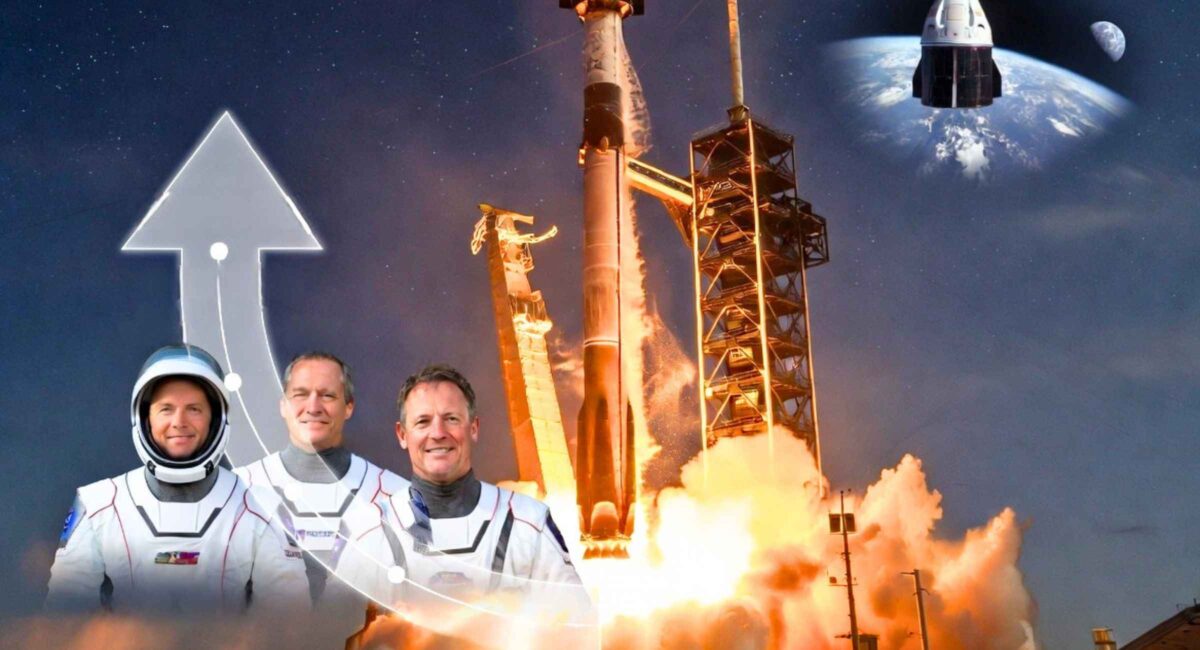
The question everyone is asking right now—“Where is Artemis 2 now?”—finally has a real-time answer. As of April 2026, Artemis II has successfully launched and is currently in high Earth orbit performing critical system checks before heading toward the Moon, with a total mission duration of about 10 days from launch to splashdown.
This isn’t just another space mission. It’s the first time humans have traveled beyond low Earth orbit in more than 50 years—and it’s laying the groundwork for a permanent return to the Moon.
Where Is Artemis II Right Now?
Right after launch on April 1, 2026, Artemis II entered a carefully planned sequence.
Current Status (Live Mission Phase)
- The spacecraft (Orion) is in high Earth orbit
- Astronauts are conducting:
- Manual piloting tests
- Life-support system checks
- Navigation verification
This phase lasts roughly 23–24 hours before the next critical step:
Trans-Lunar Injection (TLI)—the engine burn that sends the spacecraft toward the Moon.
From experience covering mission timelines, this is one of the most important windows. If anything goes wrong here, the mission doesn’t proceed.
Artemis II Timeline — Step-by-Step Breakdown
Let’s walk through the full journey, because this mission is tightly choreographed.
Launch and Earth Orbit (Day 1)
- Launch aboard NASA’s Space Launch System (SLS)
- Orion enters Earth orbit
- Systems checks and crew testing begin
This is essentially a “prove everything works” phase—before committing to deep space.
Trans-Lunar Injection (Day 1–2)
- Orion performs a powerful engine burn
- Leaves Earth orbit and heads toward the Moon
Once this happens, there’s no turning back easily. The spacecraft is now on a free-return trajectory—a path that loops around the Moon and brings it back to Earth safely.
Journey to the Moon (Days 2–5)
- Travel time: about 4 days
- Distance: roughly 240,000+ miles from Earth
During this phase:
- Crew conducts experiments
- Systems are monitored continuously
- Deep space conditions are tested
This is where Artemis II surpasses Apollo-era distances in some aspects.
Lunar Flyby (Around Day 5–6)
- Orion swings around the Moon
- Closest approach: about 4,000–6,000 miles from the surface
Important:
There is no landing.
This is a flyby mission, designed to test systems—not to touch down.
Return Journey to Earth (Days 6–10)
- Orion uses the Moon’s gravity to slingshot back
- Crew prepares for re-entry
Re-Entry and Splashdown (Day 10)
- High-speed atmospheric re-entry
- Splashdown in the Pacific Ocean
- Recovery by U.S. Navy forces
Total mission time: ~10 days
The Crew — A Historic First
Artemis II isn’t just about distance—it’s about representation.
The crew includes:
- Reid Wiseman (Commander)
- Victor Glover (Pilot) — first Black astronaut on a lunar mission
- Christina Koch — first woman to travel toward the Moon
- Jeremy Hansen — first non-American astronaut on a Moon mission
From an editorial perspective, this is one of the most significant shifts since Apollo. NASA is clearly redefining who represents humanity in space.
How Long Will Artemis II Take?
Here’s the simple answer:
- Total mission duration: ~10 days
- Time to reach the Moon: ~4 days
- Time around Moon and return: ~6 days combined
But here’s the nuance (and it matters):
This mission isn’t about speed—it’s about testing every system needed for future lunar landings.
Why NASA Is Going Back to the Moon After Apollo
This is the bigger question—and the one most people underestimate.
1. Testing for Future Moon Landings
Artemis II is essentially a rehearsal.
NASA needs to validate:
- Life support systems
- Deep space navigation
- Crew safety beyond Earth orbit
Without this, a landing mission (Artemis III) isn’t possible.
2. Building a Long-Term Lunar Presence
NASA’s goal isn’t a one-time visit.
Plans include:
- A lunar base near the south pole
- The Gateway space station orbiting the Moon
- Long-duration missions
This is fundamentally different from Apollo’s “flags and footprints” approach.
3. Preparing for Mars
Here’s the real objective (and NASA doesn’t hide it):
Mars.
The Moon is a testing ground for:
- Deep space travel
- Radiation exposure
- Long-term human survival
From covering space programs over the years, this pattern is clear:
Every major mission is a stepping stone—and Artemis II is a critical one.
Why Artemis II Matters More Than It Looks
On paper, it’s “just a flyby.”
In reality, it’s one of the most important missions in decades.
- First crewed deep-space mission since 1972
- First test of NASA’s new Orion spacecraft with humans
- Foundation for a multi-decade lunar strategy
And there’s one more detail that stands out:
The mission will travel farther from Earth than any humans in history.
That alone makes it historic.
Final Take: A Quiet Mission With Massive Consequences
Artemis II doesn’t have the drama of a Moon landing—but don’t underestimate it.
- If it succeeds → Artemis III lands humans on the Moon
- If it fails → the entire timeline shifts
Right now, the spacecraft is moving through its early mission phase, with the most critical maneuver—heading toward the Moon—just ahead.
And that’s the real story:
This isn’t the return to the Moon yet. It’s the moment that decides whether that return actually happens.