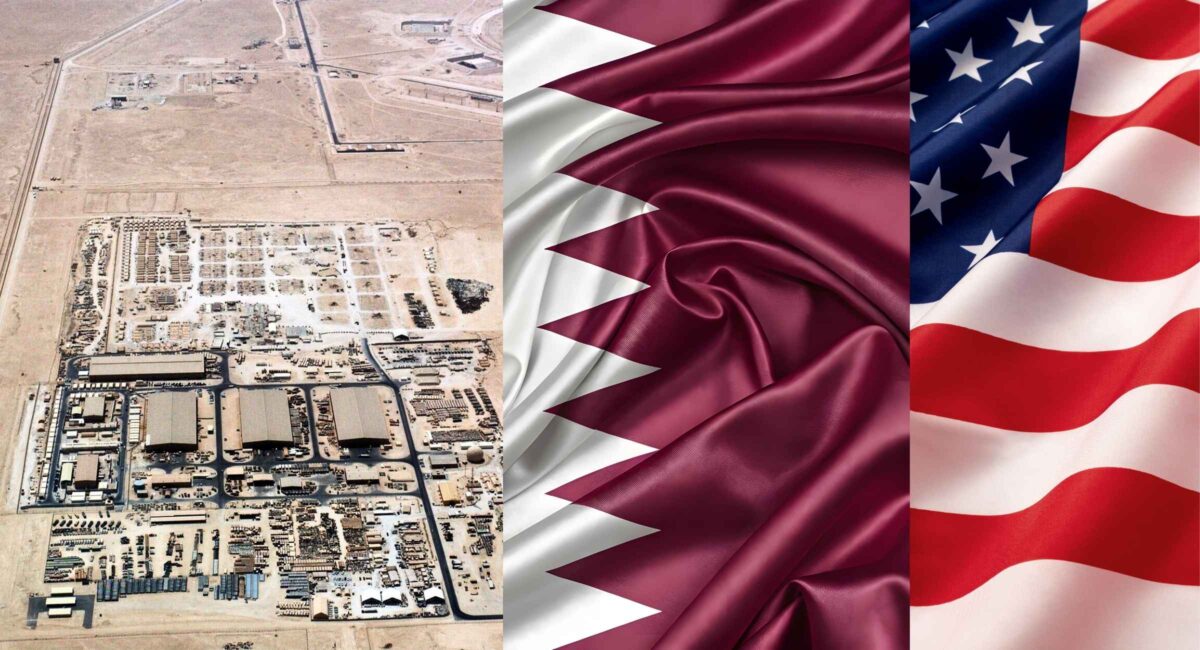
Some U.S. military personnel at Al Udeid Air Base in Qatar have been advised to depart by Wednesday evening as tensions spike over Iran’s brutal crackdown on nationwide protests and escalating threats between Tehran and Washington. Diplomats say this guidance — coming without an official evacuation order — reflects a “posture change” amid warnings from Iran that U.S. facilities in the region could be targeted if Washington intervenes. The situation unfolds against the backdrop of President Donald Trump’s repeated pledges of “very strong action” should Iran harm demonstrators, further heightening regional uncertainty.
U.S. personnel at the strategic Al Udeid Air Base near Doha have been told to leave by Wednesday evening as a precautionary adjustment to posture, not a formal evacuation. This guidance comes amid Iran’s threats to hit U.S. bases if Washington intervenes following a harsh crackdown on protesters — an escalation that carries echoes of prior confrontations and has stirred deep concern among regional partners and military leadership.
Why U.S. Personnel Are Being Advised to Leave
A Precautionary Posture Change, Not an Evacuation Order
According to three diplomats speaking to Reuters, the U.S. has advised that some personnel at Al Udeid Air Base should depart by Wednesday evening (local time). Officials characterize this move as a posture change — aimed at reducing risk exposure rather than signaling a formal large-scale evacuation.
Al Udeid is the United States’ largest military installation in the Middle East, hosting around 10,000 troops and serving as a critical hub for air operations across the region. The base’s role in U.S. Central Command (CENTCOM) operations means any threat to its security is taken with utmost seriousness by military planners.
Trump’s Threats and Iran’s Response
The advisory coincides with escalating tensions over Iran’s internal unrest. Iran has seen one of its most intense protest waves in decades — triggered by economic collapse and met with a severe crackdown that rights groups say has resulted in thousands of deaths. Trump, in public statements, has threatened “very strong action” if Iranian authorities continue to kill demonstrators.
In response, Tehran has warned neighboring governments — including those hosting U.S. troops — that it may retaliate against American bases should Washington carry out attacks. Iranian officials have explicitly mentioned potential strikes against U.S. facilities in the Gulf if conflict broadens.
This dynamic has led to the advisory for personnel to depart Al Udeid — a move that mirrors actions taken in the past, such as prior to U.S. air strikes on Iran last June. At that time, personnel and even some family members were repositioned from bases across the region before an escalation that included Iranian missile fire targeting Al Udeid.
What Al Udeid Air Base Represents
Strategic Importance of the Qatar Base
Al Udeid Air Base, located southwest of Doha, is a linchpin of U.S. military capacity in the Middle East. It supports air operations, intelligence, surveillance, and reconnaissance missions across the region — including Iraq, Syria, and Afghanistan — and houses headquarters elements for U.S. Central Command. With tens of thousands of American and coalition personnel cycling through, its operational tempo and strategic value are unmatched in the region.
Because of this prominence, any threat to the base — including warnings of retaliation from Iran — elevates risk assessments among defense planners and allied governments alike.
Historical Precedent
This is not the first time Al Udeid has faced direct risk. In June 2025, Iran fired missiles toward the base in retaliation after U.S. strikes on Iranian nuclear infrastructure. Although Qatar’s defense systems reportedly intercepted many of those projectiles and there were no U.S. casualties, the attack underscored the vulnerability of forward-deployed forces and the volatility of U.S.–Iran confrontations.
The current advisory, while less dramatic than an evacuation order, carries that historical precedent as a shadow — the memory of missiles over Doha still fresh in military planning circles.
Regional Reactions and Diplomatic Frictions
Tehran’s Warning to Hosts of U.S. Bases
Iran has explicitly cautioned governments hosting American military assets — from Saudi Arabia to Turkey and the UAE — that U.S. bases could be targeted if Washington strikes Tehran. This warning comes amid a suspension of some diplomatic contacts between Iranian and U.S. officials and reflects a heightened threat calculus in the Gulf.
These statements place host nations like Qatar in a delicate position. Gulf states are wary of escalation, with leaders publicly warning that any major U.S.–Iran confrontation would be catastrophic for regional stability and global energy markets. Qatar’s foreign ministry, for example, has emphasized the devastating consequences of any military escalation and the importance of diplomatic restraint.
No Large-Scale Evacuation Yet
Despite the advisory for personnel to leave, there are no indications of a mass evacuation. Diplomats told Reuters that this move is more restrained than the preparations seen last year before direct U.S.–Iran hostilities. No official announcements have been made by the U.S. Embassy in Doha or Qatar’s foreign ministry regarding the advisory, and no confirmed numbers for departing personnel have been released.
Implications for U.S. Military Operations
Operational Adjustments vs. Strategic Retreat
Officials stress that advising some personnel to leave is not a withdrawal of U.S. commitment to the region. Rather, it’s a risk mitigation measure — likely targeting non-essential staff, dependents, or support personnel whose presence is not critical to immediate operational capabilities.
Such posture changes are routine in periods of heightened risk; military planners calibrate force protection levels to reduce vulnerabilities while maintaining mission readiness.
Risk to Troops and Regional Stability
The advisory underscores how fragile the situation has become. If tensions escalate into open conflict — particularly if U.S. forces were to conduct strikes on Iranian soil or military targets — U.S. bases like Al Udeid could become prime targets for retaliation by Iran or its proxies.
That risk remains theoretical at this stage, but Tehran’s warnings and the advisory for personnel to depart reflect a heightened threat perception shared by diplomats and defense analysts monitoring the crisis.
What This Means for U.S. Citizens and Allies
Travel and Safety Warnings
While the advisory specifically pertains to military personnel at Al Udeid, the State Department has also issued broader guidance urging U.S. citizens in the region — particularly in Iran — to consider leaving due to instability and travel disruptions. The department has highlighted risks such as internet blackouts, restricted movement, and potential reprisals against foreign nationals amid the protests.
Qatar remains open and relatively stable compared with Iran, but the advisories highlight the unpredictability that can affect both civilian and military populations in times of geopolitical strain.
Conclusion: A Tense Flashpoint in Middle East Geopolitics
The advisory for some U.S. personnel to leave Al Udeid Air Base by Wednesday evening underscores how quickly the situation in the Middle East can escalate from diplomatic tension to military risk. It is not a full evacuation — but it is significant.
Driven by Iran’s warnings of retaliation and President Trump’s forceful rhetoric in support of protesters, the move reflects a broader strategic recalibration: protecting key assets and personnel while signaling resolve and readiness. For regional allies and civilian populations, it’s a stark reminder that geopolitical fault lines — from Tehran to Doha — remain fragile.
People watching this situation should monitor official channels from the U.S. embassy, the State Department, and allied governments for up-to-date guidance, as the coming days will be crucial in determining whether this posture change remains a precaution or foreshadows deeper military involvement.