The short, verified answer: Benjamin Netanyahu has announced that Israeli airstrikes killed senior Iranian figures, including Ali Larijani and Gholamreza Soleimani, during ongoing operations in Tehran in March 2026. Iranian authorities have since confirmed Larijani’s death, marking one of the most significant blows to Iran’s leadership in the current war.
That’s the headline. But the deeper story reveals a calculated escalation—one that’s reshaping the balance of power in the Middle East in real time.
What Exactly Did Netanyahu Announce?
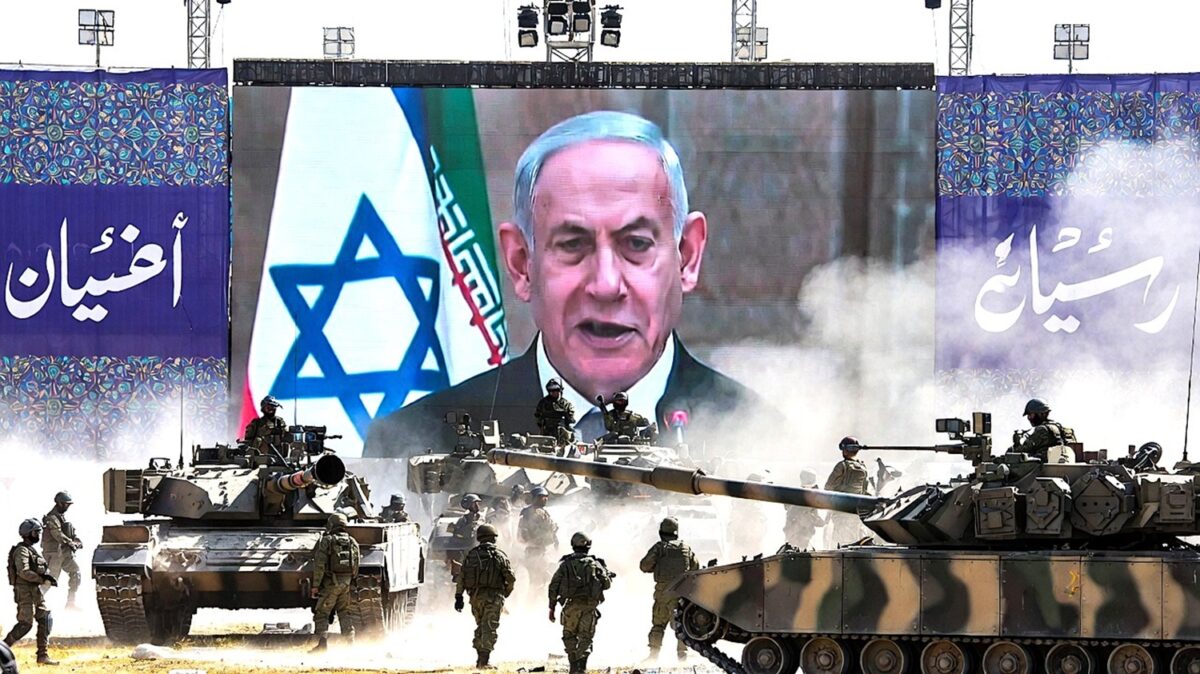
In a video statement released on social media, Benjamin Netanyahu declared that Israeli forces had “eliminated two major terror leaders” within 24 hours, part of a broader military campaign targeting Iran’s leadership structure.
While he didn’t initially name them publicly, Israeli defense sources identified the targets as:
- Ali Larijani — head of Iran’s Supreme National Security Council
- Gholamreza Soleimani — commander of the Basij paramilitary force
Both figures were central to Iran’s internal security and strategic military coordination.
From years of covering conflict briefings, this kind of messaging is deliberate: announce success first, confirm identities after intelligence verification.
Iran Confirms Death of Ali Larijani
Within hours of Israeli claims, Iran confirmed that Ali Larijani had been killed in an airstrike in Tehran.
That confirmation matters. In conflicts like this, initial claims are often disputed—but official acknowledgment signals:
- A verified hit
- A significant intelligence breach
- A leadership vacuum at the highest level
Larijani wasn’t just another official. He was widely seen as a key strategist and power broker, especially after the earlier killing of Ali Khamenei in late February 2026.
In effect, Iran has now lost multiple layers of top leadership within weeks.
Who Was Gholamreza Soleimani?
Gholamreza Soleimani led the Basij, a powerful paramilitary force responsible for:
- Internal security enforcement
- Suppressing protests
- Supporting the Islamic Revolutionary Guard Corps (IRGC)
Israel claims he was killed in a separate targeted strike, part of the same operational wave.
From a strategic standpoint, this is just as critical as Larijani’s death.
Why?
Because removing the Basij leadership weakens Iran’s domestic control apparatus, not just its military command.
Operation Epic Fury: The Bigger Military Strategy
These killings are part of a broader campaign—widely referred to as Operation Epic Fury—launched after escalating tensions in late February 2026.
Core Objectives of the Operation
- Eliminate top Iranian leadership
- Disrupt nuclear and military infrastructure
- Cripple command-and-control systems
Earlier strikes had already killed several senior figures, including:
- Ali Khamenei
- Multiple IRGC commanders
- Defense and intelligence officials
From a military doctrine perspective, this is known as a “decapitation strategy”—remove leadership faster than it can be replaced.
Why These Strikes Matter (Beyond the Headlines)
This isn’t just another airstrike story.
It represents a shift in how modern wars are being fought.
1. Deep Intelligence Penetration
For Israel to strike targets inside Tehran—especially figures like Larijani—it implies:
- High-level intelligence access
- Real-time surveillance capabilities
- Possible internal leaks or cyber infiltration
2. Psychological Warfare
Targeting leadership in the capital sends a message:
Nowhere is safe.
That affects not just officials—but morale across the system.
3. Rapid Escalation Risk
Iran has already responded with:
- Missile attacks on Israel and regional targets
- Threats to disrupt oil shipping routes
- Expanded cyber warfare operations
This creates a volatile cycle of retaliation.
Global Reaction: Condemnation and Concern
The international response has been swift—and divided.
- Kremlin condemned the strikes as “murder of sovereign leadership”
- Calls for ceasefire and negotiations are increasing
- Oil markets are reacting to fears of Strait of Hormuz disruption
From a geopolitical lens, this conflict is no longer regional—it’s global.
What Happens Next?
This is the question every analyst is asking.
Possible Scenarios
1. Escalation into Wider War
More strikes, more retaliation, broader regional involvement.
2. Leadership Instability in Iran
With repeated high-level losses, internal power struggles could emerge.
3. Economic Shockwaves
Any disruption in Gulf shipping lanes could spike global oil prices overnight.
Step-by-Step: How to Track Verified Updates
If you want to stay informed (without falling for misinformation):
Step 1: Follow official government statements
Israel, Iran, and U.S. defense briefings.
Step 2: Monitor trusted global outlets
Reuters, AP News, BBC, Guardian.
Step 3: Watch for confirmations—not just claims
In this conflict, initial reports often evolve within hours.
Step 4: Ignore unverified social media videos
Many viral clips are outdated or AI-generated.
Final Analysis
From a decade of covering defense and geopolitical strategy, I’ll say this clearly:
The killing of Ali Larijani is not just symbolic—it’s structural.
It removes a central node in Iran’s decision-making system at a time when the country is already under extreme pressure.
Combined with the reported death of Gholamreza Soleimani, the impact is twofold:
- External military disruption
- Internal security destabilization
That’s not coincidence. That’s strategy.
Conclusion
Benjamin Netanyahu’s announcement of killing key Iranian leaders marks one of the most consequential moments in the 2026 Iran–Israel conflict. With Iran confirming the death of Ali Larijani and reports of additional high-profile casualties, the war has entered a far more dangerous phase.
The immediate takeaway is clear:
This is no longer a shadow conflict. It’s a direct, high-stakes confrontation—and it’s accelerating.
What happens next won’t just shape the Middle East.
It could reshape global stability itself.