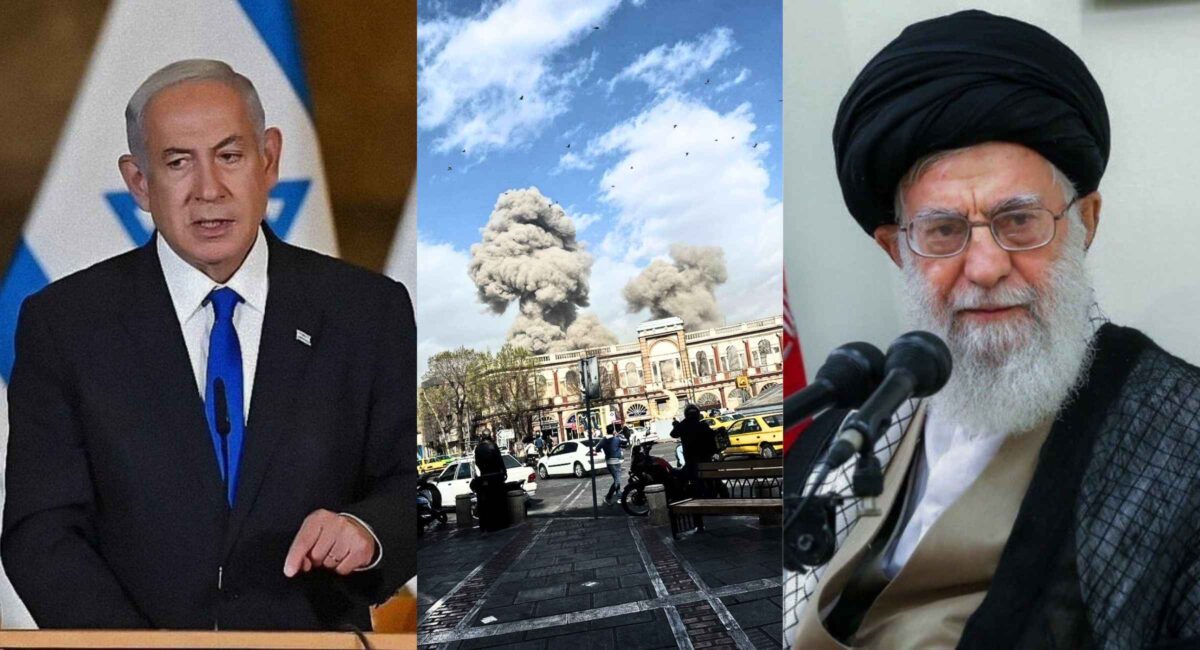
On February 28, 2026, the Israel Defense Forces (IDF) — in coordination with the United States military — launched preemptive airstrikes against Iranian nuclear and missile facilities, with multiple explosions reported in Tehran. Israel declared a nationwide state of emergency amid warnings of expected retaliatory missile and drone attacks. Sirens sounded throughout Israel, civilian airspace was closed, and Iran shut down its own airspace, signaling a major escalation in Middle East tensions.
Why This Happened: The Strategic Context
Israel and Iran have been in a years-long standoff over Tehran’s nuclear ambitions and missile program. In 2025, tensions erupted into direct conflict — including airstrikes on Iranian nuclear infrastructure — followed by cease-fires and intermittent diplomatic talks involving the U.S. and international partners. Those negotiations faltered in early 2026, with both Tehran and Western capitals accusing the other of bad faith.
Israel’s official reasoning:
Defense Minister Israel Katz publicly stated the strikes were meant to “remove imminent threats” posed by Iran’s nuclear and ballistic missile capabilities to Israeli territory and civilians. Katz further warned that Iran was likely to launch missile and drone attacks against Israel in response.
U.S. role:
The White House acknowledged U.S. military involvement in the strikes, though the exact extent — units, platforms, and operational roles — has not been spelled out in detail. Senior U.S. officials previously amassed carrier strike groups, advanced aircraft, and support assets in the region amid escalatory warnings to Tehran.
What Happened on the Ground
1. Strikes Hit Tehran Targets
Shortly after dawn, explosions were reported across central Tehran, including near key political and military sites. Iranian state media acknowledged blasts in the capital.
Witnesses in Tehran reported:
- Multiple explosions in the city center.
- Rising smoke over districts like University Street and Jomhouri.
- Reports (unverified so far) of impacts near government compound areas.
2. Israel Raised National Alert Levels
Almost immediately:
- Sirens sounded nationwide across Israel.
- Mobile alerts instructed civilians to stay near shelters or protected areas.
- The government declared a special state of emergency.
- Civilian activities — schools, workplaces, and public gatherings — were suspended under emergency protocols.
3. Airspace Closures
- Israeli civilian airspace was closed to all flights.
- Iranian authorities also shut down airspace over Iran as a precaution.
4. Retaliation Expectations
Officials on both sides warned responses could be swift:
- Israel publicly stated a missile and drone response from Iran was expected.
- Tehran hinted that U.S. bases in the region would be considered legitimate targets for retaliation if American forces engaged directly.
Who’s Involved — Key Players
| Actor | Role in Crisis |
|---|---|
| Israel Defense Forces (IDF) | Launched the preemptive strike |
| United States Military | Participated in the operation |
| Islamic Republic of Iran | Target of the airstrikes; expected retaliation |
| Iranian civilians and infrastructure | Center of explosion reports |
| Global diplomatic actors | Monitoring, with some calling for restraint |
Technical and Strategic Elements
Targets
While detailed target lists remain classified, authoritative sources indicate:
- Nuclear infrastructure and facility sites.
- Missile production and launch capabilities.
- Security and intelligence installations within Tehran.
Air and Missile Defense Preparations
Israeli authorities emphasized that air defense systems (like David’s Sling and Iron Dome) were on heightened alert — typical in anticipation of rocket or missile barrages. Previous tests of such systems (conducted in early 2026) were cited as part of operational readiness.
Immediate Regional Impact
Civilian Life and Safety
- Alerts and sirens disrupted daily life in Israel.
- Civilians were told to stay near protected areas or in shelters.
- Iranian markets and stock exchange activity halted briefly amid explosions.
Air Travel and Logistics
With both Israeli and Iranian airspace closed, airlines will need to reroute flights — likely via broader Middle Eastern corridors — potentially impacting schedules and costs for international travel from the GCC and beyond.
Global Security and Oil Markets
Even before today’s events, analysts warned that military escalation through the Strait of Hormuz — a chokepoint for global oil shipments — could spike crude prices and drive volatility in fuel markets.
International Reactions
- United States: Supporting Israel’s defensive stance but carefully managing diplomatic messaging to avoid a broader Middle Eastern war.
- European governments: Urging restraint and pledge to pursue urgent diplomatic talks to prevent full military escalation.
- Regional powers: Some states remain deeply cautious, fearing spillover into neighboring territories. (Statements still forthcoming at press time.)
A Larger Pattern — Not an Isolated Incident
This isn’t the first time Israel and Iran have engaged in direct military confrontations over nuclear and ballistic threats. In June 2025, Israel conducted strikes on Iranian nuclear facilities that significantly disrupted enrichment operations, prompting Iranian counterattacks and intense international diplomatic efforts to de-escalate.
Today’s operation — involving U.S. coordination — represents a major escalation from prior limited strikes, suggesting a broader strategic shift in how the threat is being addressed.
What Happens Next
- Military retaliation from Iran is widely expected, although the timing and scale remain unclear.
- Diplomacy could resume under emergency international mediation, but trust deficits are high.
- Civilian impacts, both in Israel and Iran, may expand if regional militias or allied states enter the conflict.
Conclusion — What This Means
Today’s Israel airstrikes on Iran mark one of the sharpest escalations in a decade-long confrontation over Tehran’s nuclear and missile ambitions. The operation’s scale and U.S. participation underscore deep concerns in Tel Aviv and Washington about Iran’s strategic capabilities. But the short-term future remains uncertain — with possible regional spillover, global economic ripple effects, and a pressing need for diplomatic channels to prevent a wider war.
This moment isn’t just a headline; it’s a geopolitical inflection point, reshaping security frameworks across the Middle East and challenging global leaders to balance deterrence with de-escalation.