The Embassy of India in Tehran has issued a fresh and urgent advisory for all Indian nationals — including students, pilgrims, business persons, tourists and Persons of Indian Origin (PIOs) — to leave Iran immediately amid an increasingly deadly nationwide protest crisis that has claimed over 2,500 lives as of mid-January 2026. The advisory, released on January 14, 2026, comes as protests against the Iranian regime’s crackdown continue to spread, government communication blackouts persist, and multiple governments — including India — warn of escalating instability and risk to foreign citizens.
In response to escalating nationwide protests and a severe security deterioration in Iran — where at least 2,571 people have been killed — the Indian Embassy is urging all Indian citizens and PIOs in the country to leave “by any available means of transport,” including commercial flights, and to stay in close contact with the Embassy for assistance. The advisory stresses safety precautions, documentation readiness, and avoiding all protests or demonstrations while departure plans are made.
Iran’s Deadly Protests and Rising Death Toll
Over recent weeks, Iran has experienced one of the most intense protest movements in decades. Initially sparked by economic hardship, including double-digit inflation and sharp currency devaluation, the demonstrations quickly morphed into widespread anti-government unrest across nearly every province. Security forces have responded with lethal force.
According to the U.S.-based Human Rights Activists News Agency, at least 2,571 people have been killed in the protests as of January 14, 2026. This figure includes protesters, bystanders and others affected by the security crackdown, making these the deadliest protests Iran has seen since the 1979 Islamic Revolution.
The severity of the crackdown has led many foreign governments to reassess risks to their citizens, and in India’s case, to issue an urgent departure advisory.
What the Indian Embassy Advisory Says
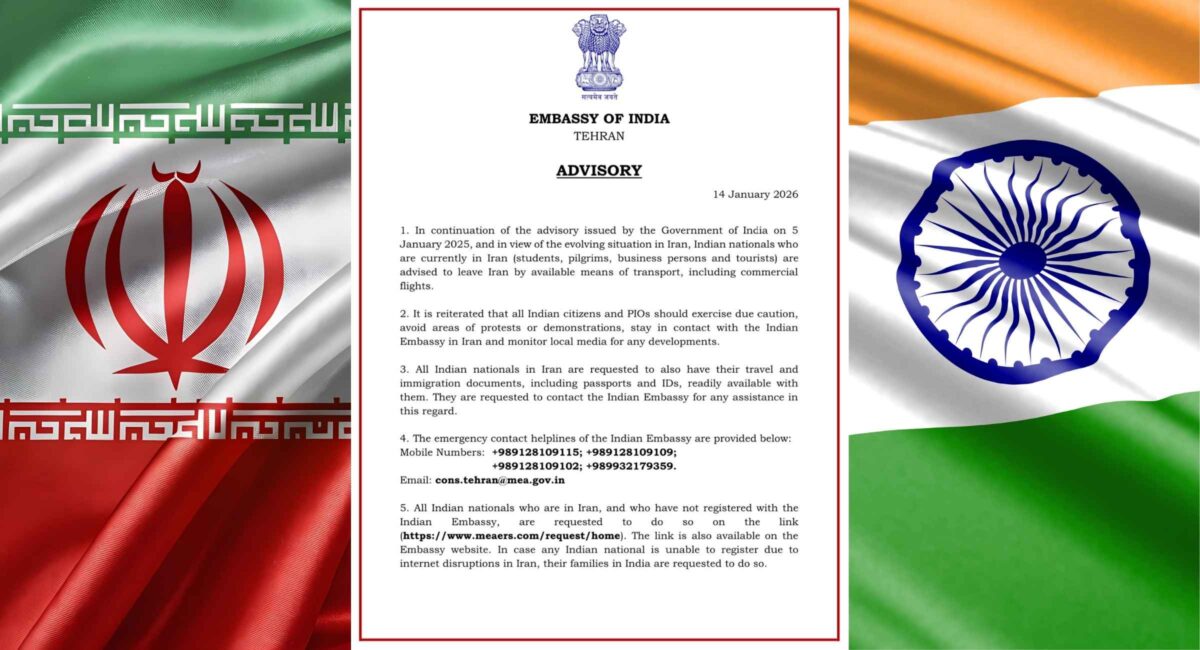
In its latest official advisory, the Indian Embassy in Tehran emphasized the urgent need for Indian citizens to leave Iran as the situation deteriorates:
- All Indian nationals — students, pilgrims, businesspersons, tourists, and PIOs — currently in Iran are requested to leave by any available means of transport, including commercial flights.
- Citizens are urged to exercise extreme caution, avoid protest areas or demonstrations, and remain in contact with the Indian Embassy in Tehran for updates and assistance.
- The advisory asks Indians to keep all travel and immigration documents — including passports and IDs — readily accessible and to monitor local media for evolving developments.
- Those not yet registered with the Indian Embassy are encouraged to do so at the earliest to ensure diplomatic support and emergency coordination.
The advisory also lists emergency helpline numbers and an Embassy support email for Indians requiring assistance.
Why India Issued the Advisory Now
India’s decision follows intensifying unrest and widespread violence in Iran’s biggest cities, including Tehran, Mashhad and Isfahan. The protests initially erupted over economic conditions and sharp rises in the cost of living but rapidly expanded into broader opposition to the clerical establishment under Supreme Leader Ayatollah Ali Khamenei.
The security situation remains volatile, with reports of:
- Communication blackouts and internet shutdowns imposed by Iranian authorities to control information flow.
- Clashes between security forces and protesters resulting in mass casualties.
- Governments around the world, including the United States, issuing urgent advisories for their citizens to depart or avoid Iran.
Given these factors, the Embassy’s warning underscores India’s concern for its citizens’ safety and the unpredictable nature of Iran’s unfolding situation.
Historical Background: Prior Advisories and Travel Warnings
This advisory is part of a series of increasingly urgent travel warnings from the Indian Ministry of External Affairs (MEA) and the Indian Embassy:
- On January 5, 2026, India’s MEA advised citizens to exercise due caution in Iran, avoid protest areas and closely monitor local news and Embassy updates.
- The travel advisory has since been amplified to an immediate departure recommendation, reflecting how the security environment has rapidly changed.
- Alongside advising departure, India recommended registering with the Embassy if not already done and emphasized embassy contact channels for coordination and assistance.
Indians and PIOs living long-term in Iran — such as students and professionals — are also urged to take this advisory seriously and plan their departure without delay.
Logistical Challenges to Leaving Iran
Departing Iran during the crisis poses several logistical hurdles:
- Commercial flights to and from Iran are limited or facing disruptions due to unrest and security measures.
- Internet blackouts and communication restrictions considerably hamper access to real-time travel information and coordination.
- Border crossings into neighboring countries, such as Armenia or Turkey, have become alternatives for many foreign nationals trying to exit Iran, though these routes come with their own challenges and require careful navigation.
Given these constraints, India’s Embassy advisory emphasizes leaving “by available means,” including any operational commercial flight or safe overland route out of Iran.
Diplomatic Support and Emergency Assistance
To assist Indian nationals during the evacuation process, the Indian Embassy in Tehran has made resources available:
- 24×7 emergency contact helplines for urgent queries and assistance.
- A dedicated email support channel for travel coordination and Embassy contact.
- Calls for Indians to register with the Embassy to streamline consular support if needed.
Being registered with the Embassy ensures that diplomatic officials can reach out with critical updates, assist with travel documentation and provide support in case of emergency situations.
Comparison With Other Countries’ Advisories
India is not alone in issuing urgent safety guidance:
- The United States Embassy in Iran has also urged U.S. citizens to leave immediately due to the risk of detention and rising violence, warning that displaying U.S. passports could increase risk.
- Australia, earlier in January 2026, similarly issued travel advisories urging its citizens to depart Iran “as soon as possible” due to violent protests and unpredictable security conditions.
These combined advisories reflect a global consensus among foreign missions that Iran’s internal unrest is posing significant risks to foreign nationals.
Voices From the Ground: Indians in Iran
Reports from social media and diaspora accounts reveal heightened anxiety among Indian students, professionals and tourists in Iran. Many are attempting to book flights out of the country or secure overland routes to Armenia and Turkey, while others are navigating the challenges of communication blackouts and localized violence.
One Indian student told local media that “the situation is unpredictable and fear is rising every day; we are trying to leave before things get worse.” While such accounts cannot be independently verified due to limited communication, they echo the urgency behind the Embassy’s advisory.
Conclusion: Safety First for Indian Nationals in Iran
As the death toll from Iran’s protests climbs past 2,500 and unrest shows no sign of abating, the Indian Embassy’s warning for Indian nationals to leave Iran immediately signals the gravity of the crisis. The advisory emphasizes proactive departure planning, careful documentation, and reliance on Embassy support amidst a fluid and dangerous situation.
For Indian nationals in Iran — students, pilgrims, businesspersons, tourists and PIOs — the directive is clear: prioritize personal safety, prepare for departure by any available means, and stay closely connected to official Embassy channels for assistance and updates.