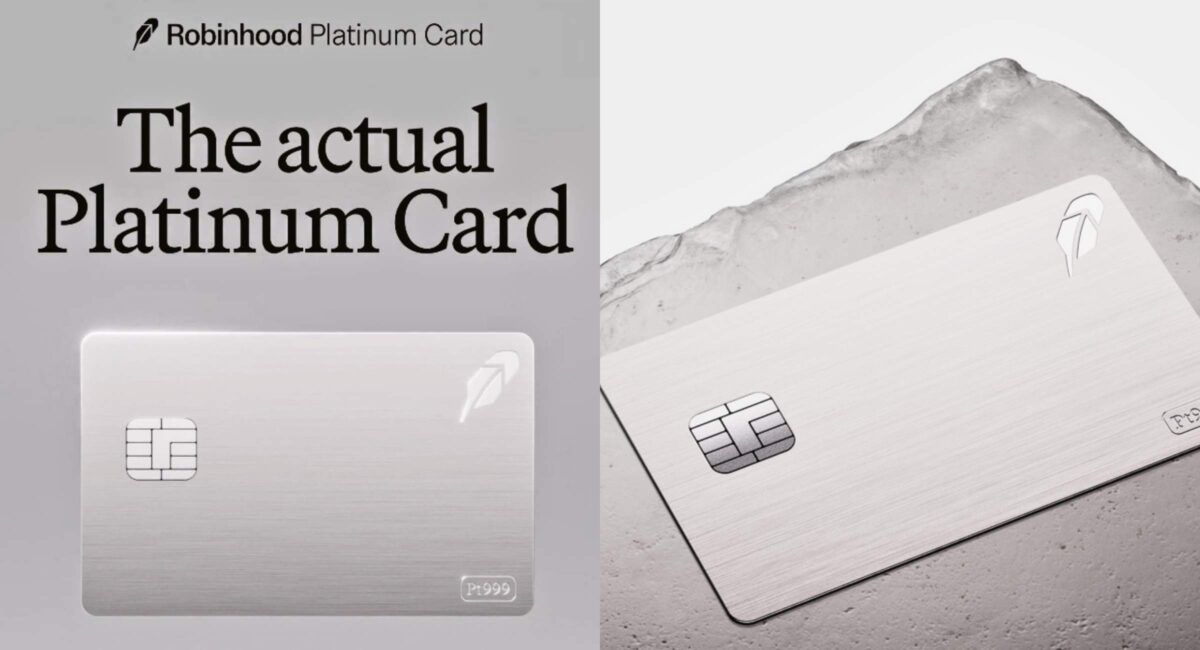
Robinhood has quietly stepped into the elite credit card arena with its invite-only Robinhood Platinum Credit Card — a suite of premium rewards and lifestyle benefits built to rival long-standing heavyweights like the American Express Platinum and Chase Sapphire Reserve. With a $695 annual fee, up to 5% cash back on dining and flights, 10% back on hotels and rental cars, and a host of annual credits and memberships, this isn’t your typical fintech add-on. It’s a statement: Robinhood now wants a slice of affluent consumers’ wallets — and it’s willing to pay out (hard) on perks to do it.
What Is the Robinhood Platinum Credit Card?
The Robinhood Platinum Credit Card is a premium, invite-only Visa credit card issued by Coastal Community Bank on behalf of Robinhood Credit, Inc., designed for high-spending consumers who want high cash-back rates on travel and dining, airport lounge access, travel credits, and lifestyle memberships. It carries a $695 annual fee and delivers headline rewards like 5% back on dining and flights through Robinhood’s portal and 10% back on hotels and rental cars booked there, plus over $3,000 in stated annual benefits — if you can use them.
Why This Matters
Credit cards with steep annual fees only make sense if the perks outweigh the cost. Traditional premium cards like the American Express Platinum or Chase Sapphire Reserve have dominated this space for years. But Robinhood’s entry — especially one that leans heavily on straight cash back instead of points — signals a shift: fintech platforms are aggressively moving beyond basic cards into lifestyle-oriented, high-value rewards offerings that try to match or beat legacy programs.
What the Robinhood Platinum Credit Card Offers
Headline Rewards (Cash Back)
These aren’t ordinary cash-back rates:
- 5% cash back on dining purchases — one of the highest flat dining rates in the premium card market.
- 5% cash back on flights booked via the Robinhood Banking app or travel portal.
- 10% cash back on hotels and rental cars — again, only when booked through Robinhood’s own portal.
- 1% cash back on all other purchases.
These rates are aggressive on the surface — especially the 10% rate — but the booking restriction (via the app’s portal) matters. Many travel portals price flights or hotel rates higher than direct airline/hotel pricing, which can erode real value.
Premium Credits & Benefits
Here’s where the card tries to justify its price tag:
Dining & Everyday Credits
- $250 annual DoorDash statement credit.
- $250 in restaurant credits at eligible locations.
- Complimentary DashPass membership (valued at ~$120/year).
Travel Perks
- Unlimited Priority Pass airport lounge access worldwide — a must for frequent flyers.
- Global Entry or TSA PreCheck credit (typically up to $120; general industry standard).
Autonomous Ride & Wellness Credits
- $250 annual autonomous ride credit — unique and unusual among premium cards.
- Memberships included: Amazon One Medical, Function Health, and ŌURA — a bundle that tilts toward health & wellness.
- $200 annual credit toward health wearable purchases.
Other Distinctives
- Complimentary Robinhood Gold membership — normally a $50/yr value — included.
- Up to 5× higher credit limits compared with the Robinhood Gold Card.
Altogether, Robinhood claims the total annual value exceeds $3,000 during a full calendar year of use — but that number assumes full utilization of each credit.
How It Works — The Fine Print That Matters
Rewards Structure
According to the official terms:
- 5 Points per $1 spent on dining.
- 5 Points per $1 on flights booked through the Robinhood Travel Portal.
- 10 Points per $1 on hotels and rental cars booked through the portal.
- 1 Point per $1 on all other eligible purchases.
- Most of these enhanced rates are capped or limited by portal usage and spend categories; once you hit caps (e.g., dining), standard rates apply.
Redemption Requirements
You must have a Robinhood Financial brokerage account to redeem rewards. They can be redeemed into your brokerage account, used to book travel through the Robinhood portal, or applied in select partner contexts.
Fees & APR
- Annual fee: $695.
- No foreign transaction fees.
- Balance transfers: None.
- Cash advance fees: Either $10 or 5% of the transaction.
Eligibility & Access — Invite Only
Unlike many cards where you can apply directly, the Robinhood Platinum Card is currently invite-only. Prospective cardholders provide their email on the Robinhood site to request access, after which Robinhood may extend an invitation.
This strategy mirrors how the company handled its earlier Robinhood Gold Card, which also began via waitlist and selective invitations.
Robinhood Platinum vs. Amex Platinum — Straight Comparison
| Feature | Robinhood Platinum | American Express Platinum |
|---|---|---|
| Annual Fee | $695 | $695–$895 (varies) |
| Dining Cash Back | 5% | 1x (non-bonus) |
| Flight Rewards | 5% (via portal) | 5x points (flexible) |
| Hotel/Car Rewards | 10% (via portal) | 5x points (via Amex Travel) |
| Lounge Access | Unlimited Priority Pass | American Express Centurion + Priority Pass |
| Travel Credits | Multiple small credits | Up to ~$300+ in Uber/airline credits |
| Wellness | Included health memberships | None |
The Robinhood Platinum differentiates with straight cash back rather than points — which simplifies value but also ties your rewards heavily to Robinhood’s own travel portal pricing and redemption requirements. Amex’s ecosystem, by contrast, offers transferable points that can have outsized travel value, especially when redeemed for premium flights.
Who This Card Is Best For
This card fits a specific profile:
- Frequent travelers willing to book through Robinhood’s travel portal to unlock the best rates.
- High spenders on dining and hotel stays who can fully realize the 5% and 10% cash back.
- Customers already entrenched in the Robinhood ecosystem — especially brokerage users who plan to redeem rewards directly into investing or travel bookings.
- People who value lifestyle memberships (wellness, rides, lounge access) over pure points accumulation.
It’s less compelling if you don’t travel often, don’t want to book through a portal, or prefer flexible points over fixed cash back.
Editorial Take — Real Value vs. Sticker Value
From covering premium card launches for over a decade, I’ve seen this playbook before: a headline rewards rate that dazzles — and restrictions beneath it that make extraction harder than it looks.
Robinhood’s 5% and 10% cash-back figures turn heads because they dwarf many competitors on paper. But those rates are bound to Robinhood’s booking portal, which historically prices travel slightly higher than aggregators or direct carrier/hotel pricing. So your effective value can drop quickly unless you’re diligent about comparing costs.
Furthermore, the annual credits — while generous — require engagement. A $250 restaurant credit sounds great, but if you don’t eat at eligible locations or have low autonomous-ride usage, that value evaporates. This is where the oft-quoted “$3,000+ in value” becomes more theoretical than practical for many.
That said, for the right user — someone who regularly books through Robinhood’s travel system, lives in Priority Pass lounges, and uses the bundled memberships — this card can outperform peers in net cash back and perks. And, importantly, the integration with Robinhood’s financial ecosystem (especially the brokerage account requirement for redemption) creates a closed loop that rewards loyalty within that platform.
Conclusion — A Worthy Challenger or Gimmick?
The Robinhood Platinum Credit Card isn’t just another fintech novelty. It’s an ambitious attempt by Robinhood to compete head-on with elite traditional credit cards by reimagining premium benefits through a modern, cash-back-first lens.
Whether it’s truly worth the $695 fee comes down to one thing: can you extract value close to the stated $3,000+ of benefits without forcing your spending patterns into a cage? For frequent travelers and diners who embrace Robinhood’s ecosystem fully, the answer might well be yes. For everyone else, it’s more nuanced — and possibly better served by existing premium offers with more flexible redemption frameworks.