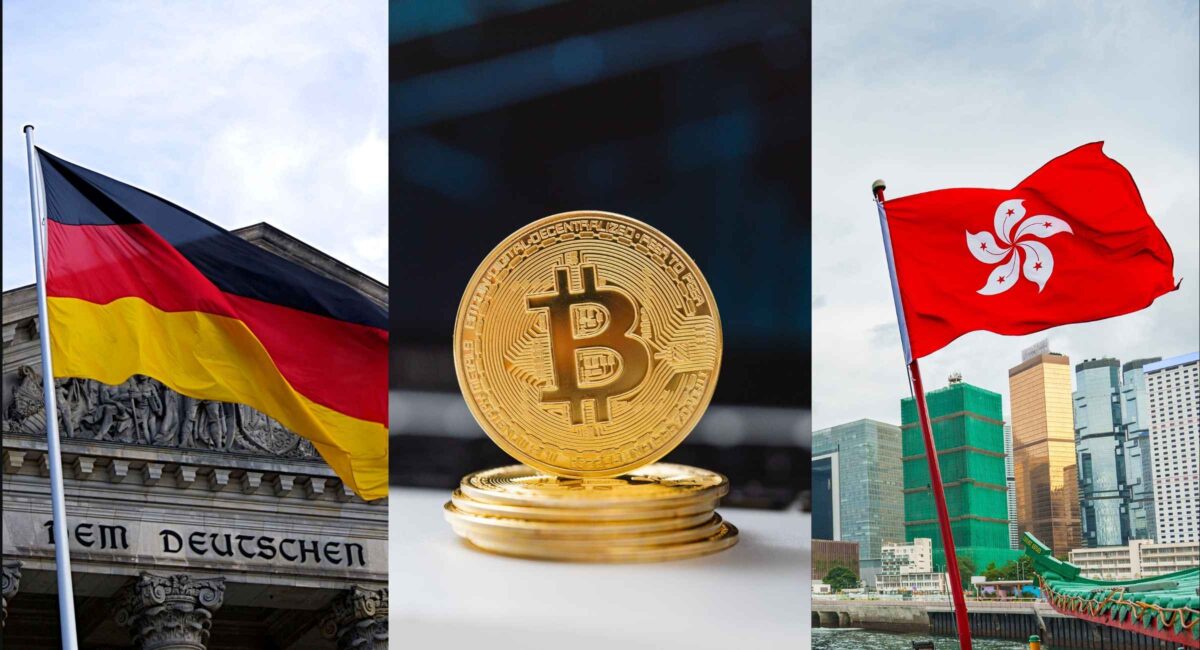
Two of the world’s most crypto-friendly tax regimes — Hong Kong and Germany — offer significant longstanding tax advantages for Bitcoin holders: in Hong Kong, individuals currently pay no capital gains tax on Bitcoin and other crypto gains, while in Germany, individual profits from Bitcoin are exempt from capital gains tax if held for more than one year, making both jurisdictions exceptionally attractive for long-term HODLers during the 2026 surge in BTC price and headlines around a possible $100K price level. These benefits contrast sharply with heavier crypto taxation in many other major economies, where gains are treated as ordinary income or investment income with substantial rates.
Why Bitcoin Tax Treatment Matters for Investors Today
As Bitcoin’s price continues its volatile trajectory — with many market participants eyeing psychological levels such as $100,000 in 2026 — tax policy is a major determinant of net investment return. In most jurisdictions, capital gains on crypto are taxed similarly to stocks or property. But long-held Bitcoin positions in Hong Kong and Germany can yield outsized returns precisely because gains can be untaxed when structured correctly.
This isn’t just theoretical: capital gains drag can erode profits for active traders. In the U.S., for example, Bitcoin is treated as property and gains are taxed both as capital gains and potentially as ordinary income; in other big markets like Japan, crypto gains face tabling steep individual tax brackets. So where tax policy is lenient, post-profit outcomes can be meaningfully stronger — especially during multi-year HODL strategies.
How Hong Kong Handles Bitcoin Taxation
Capital Gains: A Void, Not a Burden
In Hong Kong, under the Inland Revenue Department’s framework, crypto gains realized by individuals from disposals are typically not treated as taxable capital gains at all. This reflects how the region’s tax system classifies cryptocurrencies — not as a formal currency but as virtual commodities — and aligns with the territory’s broader territorial tax regime (which generally taxes only locally sourced income).
That means:
- Selling Bitcoin for a profit as a private investor typically produces no capital gains tax liability.
- Hong Kong’s profits tax applies only when activities amount to a trade or business (e.g., professional crypto trading, operation of a service), not mere buy-and-hold investing.
- There’s no separate capital gains tax regime.
Note: Corporations or individuals engaged in frequent trading — construed as business — might be liable for profits tax (capped at roughly 16.5% on net assessable profits) if the tax authority deems their activity commercial.
A Long Asian History of Capital Gains Neutrality
Hong Kong’s position is not new: historical and contemporary tax guidance consistently shows that long-term crypto gains have not been a taxable event for private investors, which places it among a small set of major global financial centers offering this advantage.
Germany’s “One-Year Rule” for Tax-Free Bitcoin Gains
Bitcoin as Private Money
In Germany, Bitcoin and other cryptocurrencies are treated as private assets (“private money”) for individual taxpayers. Gains from disposals (long-term sales) fall under ordinary tax law, not special capital gains tax rules like in some Anglophone or Nordic markets.
How the Tax Advantage Works
Under current German tax law and guidance from the Federal Ministry of Finance:
- If **an individual holds Bitcoin for longer than one year, all profits from selling it are fully exempt from German capital gains tax.
- For holdings of one year or less, gains are taxed as other income, subject to the individual’s progressive income tax rate.
- There’s also a small exemption threshold (often around €1,000 of net short-term gains for the year) below which no tax return is required.
Importantly, activities like staking rewards, mining income, or crypto received as compensation are typically treated as taxable income at the time received, even if the underlying asset is held beyond one year.
A Rule Cemented by Finance Authorities
German tax authorities have reaffirmed that long-term holdings enjoy this exemption policy — not just de facto, but through formal guidance updates published by the Ministry of Finance as recently as 2025.
Comparison: Hong Kong vs. Germany Long-Term Bitcoin Tax
| Feature | Hong Kong | Germany |
|---|---|---|
| Capital Gains Tax for Bitcoin (Individuals) | 0% for private investment disposals | 0% if held > 1 year |
| Tax on Short-Term Sales (<1 year) | May be taxable if deemed business income | Taxed as other income |
| Tax on Crypto Income (staking, mining) | Taxed as profits/business income | Taxed as income |
| Residency Requirements | Must meet Hong Kong tax residency rules | Resident under German tax rules |
| Corporate / Business Traders | Taxable under profits tax | Taxable as business/trade income |
Both systems favor HODLers but differ in nuance — Hong Kong’s blanket capital gains neutrality contrasts with Germany’s time-based exemption.
Why These Regimes Matter Amid 2026 Bitcoin Price Surge
As Bitcoin price benchmarks — like $100,000 — enter mainstream discussion in 2026, the net return profile for holders becomes materially tied to tax exposure.
Long-term Bitcoin holders in these jurisdictions stand to retain a much larger share of gross gains — effectively boosting realized returns by avoiding capital gains tax entirely. By contrast, holders in countries taxed annually or at high ordinary income rates (for example, Japan or the U.S.) may lose a consistent share of their profit on every disposal event.
Put plainly: where you hold Bitcoin — and for how long — can matter as much as when you buy and sell it.
Other Jurisdictions With Neutral or Favorable Bitcoin Tax Policies
While Hong Kong and Germany offer standout frameworks, several other nations also provide tax advantages for Bitcoin investors:
- Portugal: Bitcoin gains from assets held longer than one year are generally exempt.
- Switzerland: Private investors often face no capital gains tax on crypto.
- UAE & Cayman Islands: Some jurisdictions have zero personal capital gains tax, making them attractive for wealth management structures.
These conditions are continually reviewed and can change with new policy shifts, so keeping an eye on local tax guidance is essential.
Practical Considerations & Pitfalls for Investors
- Residency Rules Matter: Being a tax resident is usually necessary to access these benefits. Simply holding Bitcoin in a jurisdiction may not suffice.
- Short-Term Trading Costs: Selling Bitcoin within a shorter time frame — even in these jurisdictions — often triggers tax liabilities.
- Staking & Income Events: Earning crypto (through mining, staking, airdrops, or payments) typically triggers income tax events regardless of holding period.
- Corporate vs. Individual Status: Entities and frequent traders often face income tax regimes, even in favorable countries.
Tax planning should always be paired with expert local advice to navigate complexity and compliance — and to avoid penalties.
Conclusion: Longstanding Bitcoin Tax Advantages Explained
Hong Kong’s no capital gains tax on crypto gains and Germany’s one-year holding exemption are two of the most significant, investor-friendly crypto tax regimes in the world. For long-term Bitcoin holders — especially those riding price rallies like the one seen in 2026 — these policies can dramatically enhance net returns. Understanding tax law isn’t just about compliance; it’s a strategic edge in maximizing wealth retention over time.
As global tax policies evolve — with some jurisdictions tightening rules and others codifying favorable treatment — staying updated with official guidance and consulting tax professionals remains crucial.