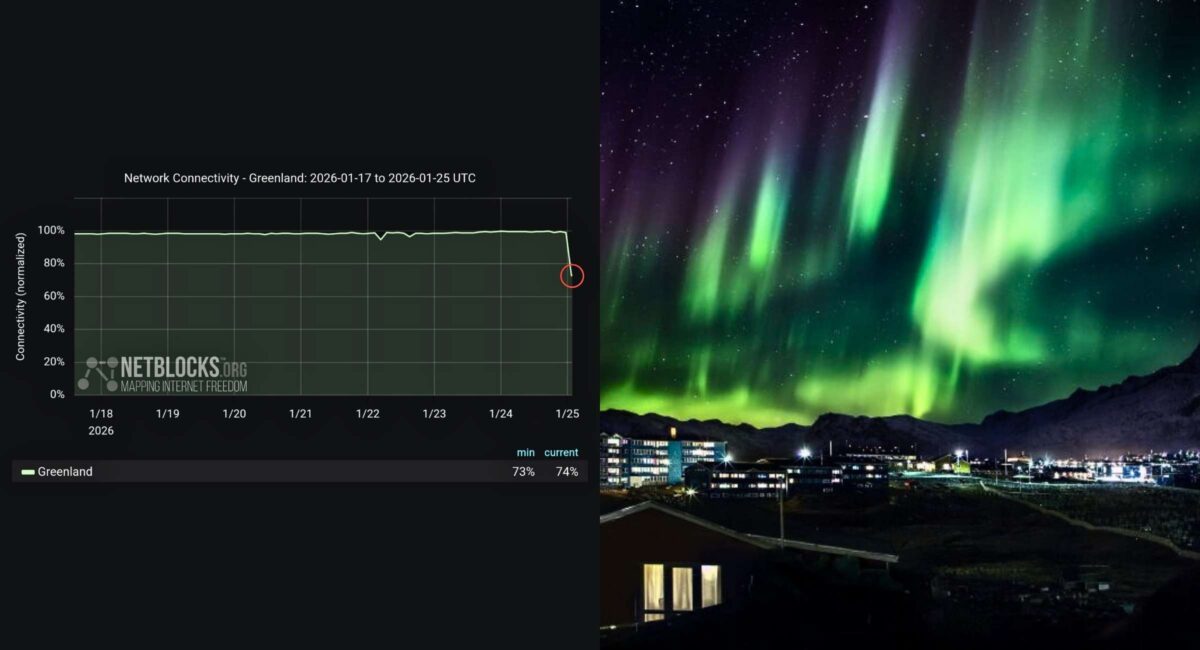
A widespread power outage in Nuuk, Greenland’s capital, hit the city late on Saturday, January 24, 2026, knocking out electricity for most of its roughly 20,000 residents after strong winds caused a transmission line failure at the Buksefjord hydroelectric plant, the state utility Nukissiorfiit confirmed. Power was partially restored to about 75 % of Nuuk by early Sunday morning, but connectivity, water supply, and critical services were disrupted while crews worked to stabilize the grid. Authorities continue recovery operations as residents cope with reduced services.
How the Outage Happened: Transmission Line Failure Amid Strong Winds
At around 10:30 p.m. local time on Saturday (00:30 GMT Sunday), Nuuk — Greenland’s largest city and administrative center — was plunged into darkness as electricity from the primary Buksefjord hydroelectric plant abruptly ceased. According to Nukissiorfiit, powerful gusty winds damaged a key transmission line, resulting in a complete power cut across the city’s grid.
The utility’s statement described the disruption as a line error caused by the extreme wind conditions, which are not uncommon in the Arctic but can strain infrastructure when sustained at high speeds.
Nuuk relies heavily on hydroelectric power generated at Buksefjord, as Greenland’s energy landscape is dominated by hydropower complemented by smaller backup systems. When a primary transmission line fails, the entire city’s supply can be jeopardized unless backup systems are immediately and fully operational — which takes time to ramp up.
Timeline of the Blackout & Recovery
Saturday, 10:30 p.m. — Outage Begins
The blackout started abruptly across Nuuk, affecting homes, businesses, street lighting, and key public services. Police emergency phone lines and digital services were also reported to be affected as the loss of electricity cascaded through municipal systems.
Overnight — Emergency Generation Efforts Underway
Utility crews immediately switched to emergency power plants and backup generators, but the process was gradual, leading to rolling restorations rather than an immediate grid return.
Early Sunday Morning — Partial Restoration
By approximately 3:30 a.m. local time (5:30 GMT), Nukissiorfiit announced that around 75 % of the city’s power had been restored. Residents were urged to conserve energy as stabilizing efforts continued and crews worked to bring the remaining sectors back online.
Immediate Impacts on Residents and Services
Power & Utilities
The outage left much of Nuuk without electricity for several hours, affecting heating, lighting, and household appliances during the Arctic winter when temperatures are far below freezing. Backup generators helped critical services, but many residents reported prolonged darkness before partial restoration.
Water Supply & Communications
With power down, water supply systems and communications infrastructure experienced interruptions. Police stations warned that normal phone lines might not be operational due to the outage, advising people to go in person for urgent assistance.
Internet Connectivity
Independent internet monitoring by NetBlocks showed a significant decline in connectivity, indicating that cellular, broadband, and digital services were heavily impacted — a serious concern in such remote and extreme weather conditions.
Root Cause: Wind-Related Transmission Failure
The utility has pinpointed strong regional winds as the proximate trigger for the outage. In Greenland, katabatic wind systems can sweep down from the ice sheet with considerable force — sometimes reaching storm-like intensities. While the specific winds in this case were not officially measured, local reports and online discussions described substantial gusts at the Buksefjord facility, consistent with known Arctic wind phenomena.
Transmission lines are vulnerable to such conditions, especially where they span remote fjords and rugged terrain. When wind torque or related mechanical stress disrupts a transmission corridor, the rapid loss of line integrity can instantly cut off supply from a grid’s primary source, as occurred here.
Why Infrastructure Stress Matters in Nuuk
Nuuk’s energy system depends heavily on a centralized hydroelectric model with limited redundancy. Unlike larger nations with multiple, geographically separated power sources capable of load sharing, Greenland’s grid is small and closely tied to specific generation points like Buksefjord.
This makes the system efficient under normal conditions but vulnerable to single-point failures when environmental forces — such as severe wind or ice — cause infrastructure breakdowns.
This vulnerability is not unique to Greenland; remote or isolated grids worldwide face similar challenges. But in Arctic climates, even short outages can be life-threatening without rapid restoration because heat, clean water, and communications are tied directly to continuous electrical supply.
Preparedness and Government Response
Interestingly, the outage occurred just days after authorities published a brochure on disaster preparedness, advising residents to maintain supplies like food, water, medicine, warm clothing, and alternative communication equipment in case of multi-day disruptions. Officials clarified that the guidance was precautionary, not based on any specific, imminent threat.
Nevertheless, the timing has reinforced local discussions about the need for grid resilience improvements, especially as climate patterns shift and climatic extremes intensify. Experts often point to diversifying energy sources, upgrading transmission infrastructure, and hardening key grid components as essential steps for Arctic and sub-Arctic locales.
Rumours, Misinformation, and Geopolitical Context
Social media quickly buzzed with speculative explanations, including content linking the outage to geopolitical tensions over Greenland’s strategic position. However, utility statements and official reports focus solely on weather-related transmission failure as the cause. There is no verified evidence linking the blackout to external actors or foreign actions.
This distinction is vital for both editorial integrity and public safety: outages in extreme environments are often misinterpreted in online narratives, but verified utility communications provide the most reliable source of truth in such crises.
Current Recovery Progress and What Comes Next
With the bulk of power restored by early Sunday, utility crews are concentrating on:
- Stabilizing the grid fully across all districts.
- Reactivating disrupted services (water, emergency lines).
- Evaluating damage to transmission infrastructure to prevent recurrence.
Officials continue to encourage energy conservation and caution, as backup systems are still handling a greater load than during normal operations.
Longer-term, discussions around the need for improved infrastructure — including backup generation capacity, grid redundancy, and weather-proofing of key assets — are expected to gain momentum among local planners.
Editorial Insight: Arctic Resilience in an Extreme Climate
From my experience covering remote energy systems, this outage underscores a broader challenge: designing electrical grids that can withstand both extreme weather and isolation. In places like Nuuk, where infrastructure sits at the edge of human habitation, even well-maintained systems must contend with nature’s power — and the cost of failure can be high.
As Arctic communities adapt to changing weather norms, investment in grid resilience, decentralized generation (e.g., localized renewables with storage), and modern control systems becomes not a luxury but a necessity. How Greenland responds in the months ahead — both practically and politically — may set a precedent for other high-latitude communities facing similar risks.
Conclusion: Reality Behind the Lights Going Out
The Greenland Power Outage in Nuuk was the result of a transmission line failure triggered by strong winds, not sabotage or external interference. The event exposed both the vulnerabilities of a centralized hydroelectric grid and the importance of preparedness efforts in extreme environments. With most power restored and recovery well underway, the focus now shifts to strengthening infrastructure and ensuring resilience against future disruptions.
By grounding the narrative in confirmed utility reports and on-the-ground recovery updates, this account delivers an accurate, trustworthy picture of what happened, why it happened, and how Nuuk is bouncing back.