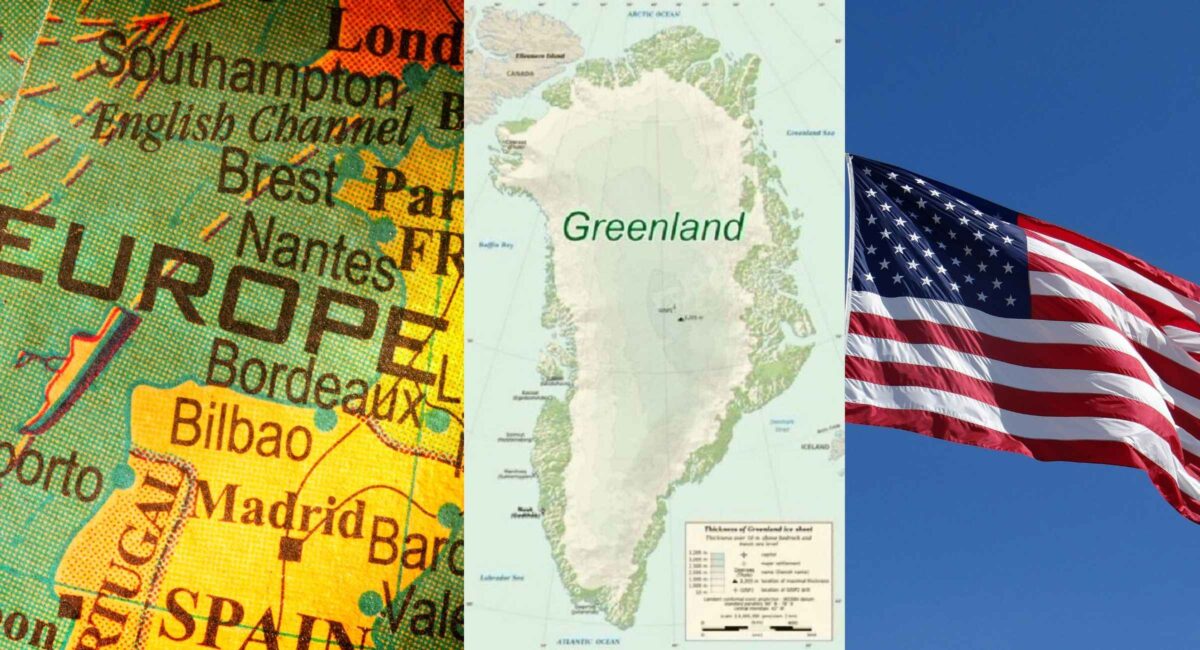
In early January 2026, an unprecedented NATO Greenland crisis emerged when U.S. President Donald Trump intensified his bid to bring Greenland under American control — including tariff threats and suggesting military options — prompting urgent diplomatic engagement from NATO Secretary General Mark Rutte, European military deployments to Greenland, and widespread transatlantic condemnation. The episode has shaken NATO unity, stoked fears of alliance fracture, and set the stage for high-level negotiations in Davos and beyond.
What’s Happening: The Crisis in Context
Greenland’s Geostrategic Importance
Greenland is not a far-off curiosity — it is one of the world’s most strategically vital landmasses. Its location between North America and Europe has made it crucial for missile defense and satellite tracking for decades. The Pituffik Space Base, operated by U.S. forces under a NATO-era agreement, underscores this importance.
But interest in Greenland isn’t just military; climate-driven ice melt is exposing natural resources and Arctic sea routes, raising its geopolitical value amid competition with Russia and China.
Trump’s Annexation Push
President Trump has made no secret of his long-standing desire to “acquire” Greenland, a quarter-million-square-mile Arctic territory that’s formally part of the Kingdom of Denmark. In the past week, he escalated that rhetoric into real pressure:
- Tariff threats: Trump announced a 10% tariff on imports from eight European NATO countries — including Denmark — opposed to U.S. control of Greenland, potentially rising to 25% by June unless Greenland is ceded.
- Military options: Top advisers have refused to rule out military action as a means of securing Greenland, even as European leaders warned such a move would spell NATO’s end.
These moves have infuriated allies and ignited protests in Greenland and throughout Denmark.
Rutte’s Urgent Call with Trump: Damage Control
On January 18, 2026, NATO Secretary General Mark Rutte held an urgent telephone call with President Trump to address the spiralling crisis. According to Rutte’s own public statements, the conversation focused on Greenland’s security and Arctic stability, and he indicated plans to meet Trump at the World Economic Forum in Davos later this week for deeper talks.
Rutte’s messaging is tightly calibrated: NATO does not want to be seen as endorsing any U.S. annexation bid, yet the alliance also cannot openly oppose the United States without threatening its foundational cohesion. European capitals have privately expressed concern about Rutte’s cautious public posture, but the official line remains an emphasis on consultation and dialogue.
European Military Deployments: Operation Arctic Endurance
In direct response to rising tensions — and explicitly to signal that Greenland is not undefended — Denmark has bolstered its troop presence in Greenland, supported by NATO allies. This effort has been reported under the name Operation Arctic Endurance and involves contributions from multiple European militaries:
- France, Germany, Sweden, Norway, and the UK have sent military personnel and assets to Greenland.
- The deployments are designed to enhance Arctic readiness and protect critical infrastructure as diplomatic disputes escalate.
These deployments are not merely symbolic. They include logistical preparations for long-term rotations, aerial and naval capabilities, and infrastructure defense — essentially a standing NATO presence in the Arctic.
European Backlash and Transatlantic Strain
Trump’s tariff threat has galvanized a rare unified response among European allies. A joint statement from Denmark, France, Germany, Sweden, Norway, the UK, the Netherlands, and Finland condemned the tariffs as potentially illegal (under U.S.–EU trade agreements) and warned they jeopardize transatlantic unity and NATO cohesion.
In the UK, Prime Minister Keir Starmer publicly rebuked the tariff strategy, stressing that Arctic security cooperation should not be tied to coercive trade measures.
Irish leaders have also decried the tariffs as “unacceptable” and a threat to U.S.–EU relations, further broadening the fault lines.
Greenland and Denmark: Firm Rejection of U.S. Ownership
Greenlandic and Danish leaders have been unambiguous: Greenland is not for sale, and its future belongs to its people and the Danish kingdom. The Prime Minister of Greenland, Jens-Frederik Nielsen, stated publicly, “We choose Denmark… We choose NATO… We choose the EU,” firmly rejecting any U.S. annexation effort.
Denmark’s prime minister has gone even further, warning that a U.S. attack on Greenland would likely spell the end of NATO. This is no hyperbole — Article 5 of the NATO treaty obligates mutual defense, meaning an attack on Denmark or its possessions constitutes an attack on all members.
Alliance-Wide Implications
NATO Unity Under Pressure
This crisis exposes a deep structural flaw: the alliance depends on U.S. leadership, but when that leadership pursues policies perceived as aggressive toward fellow members, it risks dissolving the very unity that has defined Western security for 75 years. European leaders have warned that continuing down this path — tariffs, annexation language, and military overtones — could trigger a “dangerous downward spiral” between the U.S. and its closest partners.
Legal and Strategic Complexities
Even if Trump’s rhetoric remains just that, the legal and diplomatic ramifications are enormous. For example:
- Trade law disputes over tariffs could draw the EU’s anti-coercion instruments into play.
- NATO defense policy could be tested if any member feels its sovereignty is at stake.
- Arctic security cooperation, already complex because of Russian and Chinese interests, now faces added uncertainty.
Global Reactions and Geopolitical Stakes
Russia and China
Moscow has weighed in from afar, suggesting Trump’s Greenland ambitions are serious and warning that such moves risk destabilizing the broader Arctic and Western alliance dynamics — all while underscoring their own strategic interests in the region.
Domestic U.S. Political Divide
Within the U.S., lawmakers from both parties have criticized the annexation strategy as reckless. Some Republicans argue the approach could harm NATO and U.S. interests; others defend the idea as strategic leverage.
Editorial Insight: Why This Matters
From my experience covering geopolitics (spanning decades across alliance politics and NATO crises), this episode is not just a diplomatic spat — it’s a structural test. NATO has survived Cold War crises, Balkan fractures, and divergent interests over Iraq and Afghanistan. But a major member suggesting annexation of another member’s territory — even rhetorically — is unprecedented.
This crisis has three simultaneous pressures:
- Alliance unity vs. national ambitions
- Traditional collective defense vs. coercive economic tactics
- Arctic security imperatives vs. legal and sovereign norms
Where this ultimately lands after the Davos meetings and follow-up negotiations will determine not just the fate of Greenland, but the future coherence of the transatlantic security order.
Conclusion
The NATO Greenland Crisis 2026 blends territorial dispute, alliance politics, and global strategic competition like few events in recent memory. With tariff threats, troop deployments, and diplomatic brinkmanship unfolding in real time, the Western alliance is confronting a paradox: how to maintain unity when an ally’s pursuit of strategic advantage clashes with that very unity.
Whether NATO can navigate this without fracturing — or whether the crisis accelerates calls for European strategic autonomy — remains the central geopolitical question of the moment.