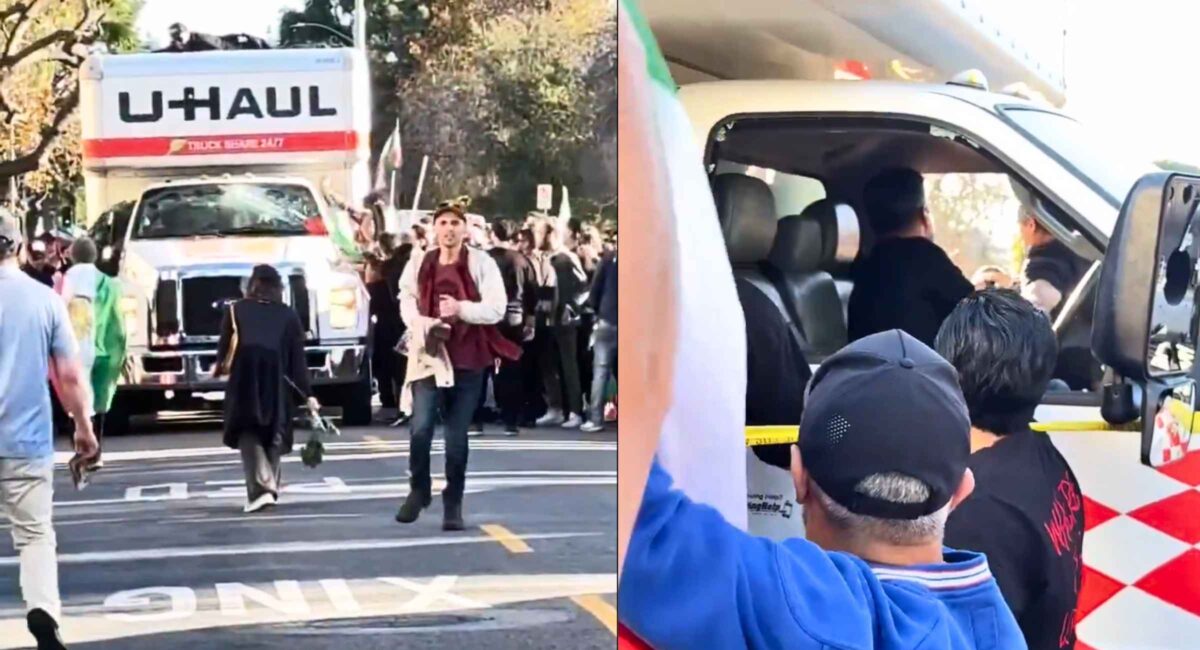
A U‑Haul truck drove into a crowd of anti‑Iranian regime protesters in Westwood, Los Angeles, on January 11, 2026, injuring at least two people and sparking chaos as demonstrators chased and attacked the driver before police intervened. The incident occurred during a large rally supporting nationwide protests in Iran, where human rights organizations say more than 500 people have been killed in a severe security forces’ crackdown on dissent. Law enforcement has detained the driver for investigation while the demonstration — marked by calls for “Free Iran” and regime change — reflects the intensity of global solidarity with Iranians facing harsh repression.
What Happened in Los Angeles: U‑Haul Into Crowd at Iran Protest
Around 3:30 p.m. local time on Sunday, a U‑Haul box truck plowed into a group of protesters assembled outside the Wilshire Federal Building in the Westwood neighborhood of Los Angeles, an area home to one of the largest Iranian diaspora communities in the United States. Thousands had gathered to support demonstrators in Iran and demand an end to the Islamic Republic’s rule. The march was part of a broader wave of global protests echoing the unrest inside Iran.
Eyewitness footage and local reports show the truck driving through the crowd on Veteran Avenue, with demonstrators scrambling out of the truck’s path before the vehicle came to a stop. Protesters then surrounded the truck, smashed the windows, and attempted to attack the driver — throwing punches and using flagpoles in the chaotic aftermath. Law enforcement eventually pulled the man from the vehicle and took him into custody.
The Los Angeles Fire Department reported that two people were evaluated by paramedics at the scene but both declined further treatment; no serious injuries have been reported. Police said the driver — whose identity has not yet been released — is being detained pending further investigation.
Banners and Messaging on the Truck
A politically charged banner was affixed to the side of the U‑Haul reading:
“NO SHAH. NO REGIME. USA: DON’T REPEAT 1953. NO MULLAH.”
This slogan references the 1953 U.S.‑ and UK‑backed coup in Iran, which toppled Prime Minister Mohammad Mossadegh and helped consolidate the Shah’s rule — a historical touchstone that still resonates in Iranian political discourse. Protesters were seen removing the signs from the truck as tensions escalated.
Police say they do not believe the incident was politically motivated or an act of terrorism, suggesting instead that it stemmed from an altercation in the densely packed crowd. The driver could face charges, including assault with a deadly weapon, according to law enforcement officials.
Iran Protests and International Solidarity
The Los Angeles incident unfolded against the backdrop of massive unrest in Iran, where anti‑government demonstrations have surged since late December 2025. What began as protests triggered by economic hardship — notably the sharp depreciation of the Iranian rial and rising prices — has evolved into widespread demands for regime change and political reform.
Human Rights Activists News Agency (HRANA), a U.S.‑based rights group, says the death toll in Iran’s crackdown has surpassed 500, including hundreds of protesters and dozens of security personnel, with thousands more arrested. Iranian authorities have not released official figures but have blamed foreign “interference” for stoking unrest.
Insurgent energy in Iran has spread across the country, with significant clashes between demonstrators and security forces reported in cities from Tehran to Shiraz, often met with live ammunition and aggressive suppression tactics. Communication blackouts and media restrictions have made independent verification challenging, but rights groups warn the true toll may be even higher.
Internationally, rallies in cities like London, Paris, Berlin, and Los Angeles have shown visible support for Iranian protesters. In Los Angeles — sometimes called “Tehrangeles” due to its large Iranian expatriate population — the demonstration drew hundreds to thousands of marchers, many waving Iranian flags and chanting slogans calling for freedom and unity against authoritarian rule.
How the Los Angeles Incident Unfolded
The Scene in Westwood
- Location: Veteran Avenue near Wilshire Federal Building, Westwood, Los Angeles.
- Time: Around 3:30 p.m. local time on Sunday.
- Event: Anti‑Iranian regime rally in support of protesters in Iran.
- Incident: A U‑Haul truck drove into a crowd of marchers, striking one person but causing no reported serious injuries.
Police and Emergency Response
The Los Angeles Police Department (LAPD) took command of the situation, cordoning off the area, detaining the driver, and dispersing the crowd. The Los Angeles Fire Department confirmed that paramedics treated and released two individuals at the scene. FBI Joint Terrorism Task Force members were reportedly assisting in examining the incident’s circumstances.
Mayor Karen Bass later addressed the situation, emphasizing the importance of peaceful protest and respect for First Amendment rights, even as national and international tensions run high. (Context from broader reporting patterns; direct local statements referenced in multiple local news dispatches.)
Reactions and Ongoing Investigation
The LAPD has not yet publicly identified the driver or clarified his motivations. Initial remarks from local officials suggest the event may not be directly politically motivated, but the context of a charged rally and the presence of provocative slogans on the truck complicates that assertion. Ongoing investigations will focus on intent, potential charges, and how the event unfolded in the moments leading up to the collision.
Protesters themselves reacted with anger and fear, with some attempting to attack the driver while others called on police for protection and calm. Social media footage quickly circulated showing people in the crowd throwing objects and trying to rip down signs, illustrating how quickly a peaceful demonstration can turn chaotic in charged environments.
What This Incident Reveals About Global Tensions
The clash in Los Angeles serves as a stark reminder of how distant geopolitical conflicts can manifest locally — especially in cities with large expatriate communities and deep historical ties. In this case, the Iran protests — rooted in economic distress, repression, and political discontent — have reverberated across continents, drawing supporters and opponents alike to the streets.
The slogans on the U‑Haul truck referenced historical grievances, including the 1953 coup in Iran, which has long been a touchpoint in Iranian political narratives and diaspora activism. That the truck’s message included such politically loaded language suggests that symbols of Iran’s modern political history continue to influence dissent and solidarity movements even outside the country’s borders.
Safety and Security Implications
While no major injuries were confirmed, the incident underscores the risks inherent in large public demonstrations, particularly when conflicting narratives and historical grievances are present. Organizers and law enforcement often prepare for large crowds and possible confrontations, but vehicle‑related incidents — whether intentional or reckless — can introduce a sudden escalation of danger.
Law enforcement agencies urge protest participants to remain aware of their surroundings and report suspicious behavior immediately. Meanwhile, authorities continue to review footage and interview witnesses as part of the ongoing investigation.
Conclusion: A Flashpoint in a Larger Struggle
The U‑Haul truck incident in Los Angeles wasn’t just a local traffic collision — it was a flashpoint at the intersection of diaspora politics, global protest movements, memory of historical interventions, and contemporary demands for freedom and human rights in Iran. Though thankfully no critical injuries were recorded, the event punctuates how emotionally charged and globally interconnected the current moment has become.
As investigations continue and protests persist both in Iran and abroad, events like this will remain a barometer of the intensity with which people worldwide are engaging with one of today’s most volatile struggles for civil liberties and regime change.