In a high-stakes pivot at the intersection of energy policy and geopolitics, President Donald Trump has urged the world’s biggest oil companies to invest at least $100 billion to revive Venezuela’s struggling oil industry, framing the move as both an economic opportunity and a strategic shift following the U.S. capture of Nicolás Maduro. But even as the administration promises “total safety” and U.S. backing for foreign investment, major executives from Chevron, ExxonMobil, ConocoPhillips and others have sounded a cautious note — saying Venezuela is currently “uninvestable” without deep legal and commercial reforms. The effort highlights profound challenges ahead if Washington hopes to transform Venezuela’s energy sector and entice firms to pour capital into one of the world’s largest yet dilapidated oil reserves.
Why Trump Is Pitching a $100 Billion Oil Investment in Venezuela
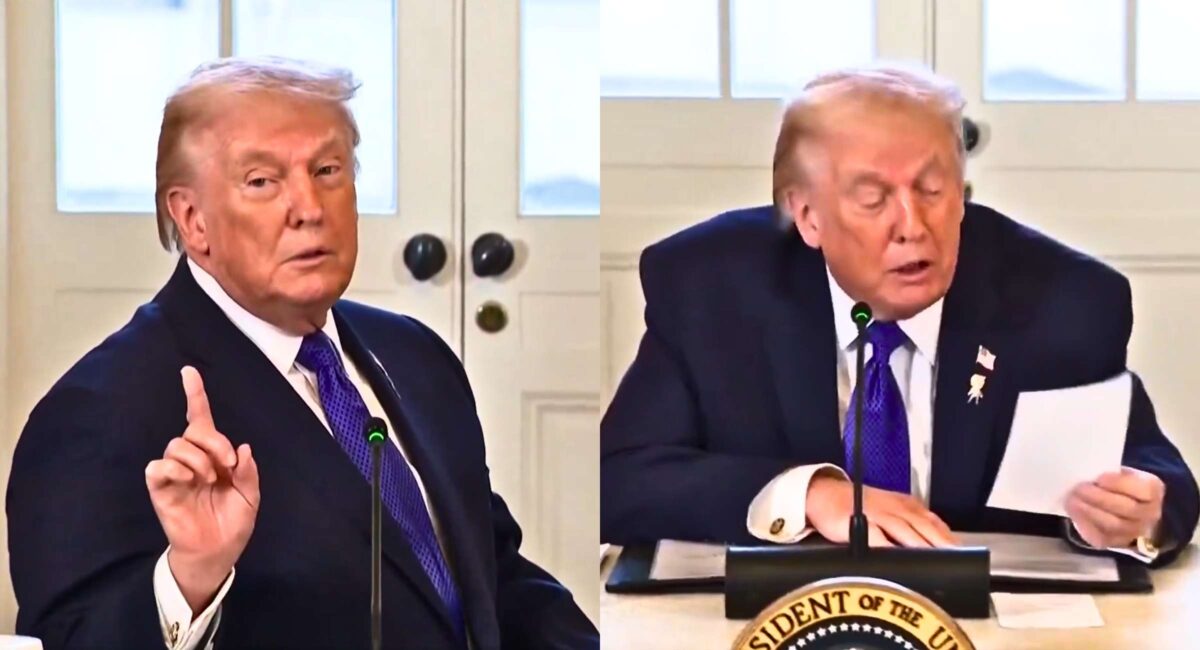
On January 9, 2026, President Trump convened nearly two dozen top executives from U.S. and international energy firms at the White House to sell his vision for Venezuela’s oil sector revitalization, a plan he says could unlock one of the globe’s richest hydrocarbon endowments while simultaneously lowering energy costs for American consumers. Trump asserted that the $100 billion would come from private investment — not federal funding — and touted substantial rewards for companies willing to commit capital once legal, security and operational barriers are addressed.
“We’re talking about rebuilding one of the greatest energy assets on Earth,” Trump said, emphasizing U.S. coordination with Venezuelan interim leaders and pledging protection and assurances. “You have total safety…you’re dealing with us directly, not dealing with Venezuela.”
Administration officials have framed the approach as part of a broader strategy to revive global energy leadership, serve U.S. refining needs and anchor Venezuela’s long-declining production back onto the global market. Venezuelan crude, heavy and high in sulfur, is well-suited for many Gulf Coast refineries — a point underscored by Trump, who flagged the potential for upwards of 50 million barrels of Venezuelan oil to be integrated into U.S. supplies under new arrangements.
Yet the phase of grand visions quickly collided with industry reality.
Industry Response: ‘Uninvestable’ Without Legal Reforms
When Trump put forward his $100 billion call to action, the reaction from major oil company leaders was measured — at best.
ExxonMobil’s Stark Assessment
ExxonMobil CEO Darren Woods delivered one of the most straightforward responses: Venezuela is “uninvestable” in its current state. Woods pointed to structural impediments — a lack of durable legal protections, unclear commercial frameworks, outmoded hydrocarbon laws and a history of asset seizures — that make committing billions of dollars in capital a financial and legal minefield.
Exxon’s history in Venezuela goes back decades, with assets expropriated in 2007 and again later as political winds shifted. Woods acknowledged Exxon would consider sending a technical assessment team to Venezuela to evaluate conditions on the ground, but stopped short of any firm investment pledge, citing the need for significant reforms first.
Chevron’s Conditional Optimism
By contrast, Chevron — the only U.S. major still actively operating in Venezuela — offered a somewhat more optimistic take. Vice Chairman Mark Nelson told Trump’s gathering that Chevron remains “committed to Venezuela’s present” and believes it could increase its oil output by roughly 50 percent within 18–24 months, provided regulatory and operational conditions permit.
Chevron’s existing joint ventures and infrastructure in Venezuela give it a distinct position. Yet even Chevron’s enthusiasm was tempered by remarks focusing on potential growth rather than concrete investment pledges toward the president’s lofty $100 billion target.
ConocoPhillips and Other Voices
Executives from ConocoPhillips and other firms also voiced openness in principle but underscored caution. With longstanding claims tied to past expropriations (Conoco’s losses are pegged in the billions), their participation hinges on legal protections and dispute-settlement clarity that don’t currently exist.
Collectively, this lukewarm response from the oil sector shows a stark disconnect between Trump’s rhetorical pitch and private investment sentiment — illuminating the depth of the legal, political and economic reforms needed before capital flows at scale.
Legal Reforms and Investment Protections: The Real Barrier
The core theme in oil executives’ cautionary tone is legal certainty. In sectors like deep-oil infrastructure, where drilling platforms, pipelines and refineries cost billions — and returns are often locked in for decades — investors demand predictability and enforceability. Venezuelan law, historically unpredictable, with frequent political interference and state-led nationalizations, remains a primary sticking point.
Exxon’s Woods explicitly stated that “significant changes have to be made” in legal frameworks, hydrocarbon laws and commercial protections before any sustainable investment can occur. Rebuilding Venezuela’s oil sector without robust guarantees risks repeating the cycles of boom and bust that have defined the country’s industry for decades.
For companies like Exxon and ConocoPhillips, the fear is not just about dollars lost in a one-off project — it’s about protecting shareholder capital in environments where political shifts can wipe out hard-earned gains overnight. Chevron, with existing footholds, may face lower entry costs — but broad capital deployment still hinges on similarly sweeping reforms.
The $100 Billion Figure: Realistic or Rhetorical?
Analysts note that $100 billion is aspirational. Rebuilding Venezuela’s oil sector — historically capable of producing nearly 4 million barrels per day at its peak — indeed requires massive capital infusions. But even optimistically, scaling production back to historic levels could require a decade or more and potentially $150–$200 billion when factoring in repairs, technology upgrades, workforce development and compliance systems.
Rather than an immediate expiration-date commitment, industry insiders see Trump’s figure as a signalling tool — a way to get companies talking and to shift narratives around Venezuela’s energy potential. The reality, however, is starkly different, with oil market economics, legal risk and geopolitical instability intersecting to dampen wholehearted corporate enthusiasm.
Geopolitical Backdrop: U.S. Strategy, Venezuelan Sovereignty and Global Markets
Trump’s Venezuela initiative cannot be separated from broader geopolitical dynamics. The U.S. military’s high-profile capture of Nicolás Maduro was a dramatic escalation that immediately thrust Venezuelan oil into American energy strategy — not just as an asset to rehabilitate, but as a geopolitical lever in hemispheric energy competition.
Critics argue that this heavy-handed approach risks undermining Venezuela’s sovereignty and complicating relations with global powers like China and Russia, which have longstanding investments and influence in the region. Others see an opportunity for the U.S. to reassert energy leadership and counter foreign footholds. Conceptually, a revived Venezuelan sector could help stabilize global markets and offer new supply lines — but it demands institutional reforms that have eluded the country for decades.
Potential Risks and Rewards for U.S. Energy Policy
For domestic energy stakeholders, Trump’s pitch presents both hope and concern:
- Lower Energy Prices: A surge of Venezuelan crude into global markets could ease prices, benefiting consumers, but potentially hurting U.S. shale profitability.
- Strategic Supply Diversity: Access to Venezuela’s heavy crude could diversify U.S. refiners’ feedstock and expand hemispheric energy cooperation — but only if legal barriers are addressed.
- Political Fallout: Heavy involvement in another nation’s core industry invites deep scrutiny and ideological opposition across domestic political divides.
Conclusion: A Grand Vision Meets Ground-Level Reality
President Trump’s call for a $100 billion private sector investment in Venezuela’s oil sector is emblematic of ambitious American energy policy following a seismic geopolitical event. But oil executives’ cautious responses — particularly ExxonMobil’s blunt “uninvestable” assessment — reveal that vision alone cannot substitute for legal clarity, commercial predictability and structural reform.
What lies ahead is a two-pronged challenge: crafting a legal and economic framework that inspires investor confidence and navigating the international political consequences of deep U.S. involvement in Venezuela’s oil industry. The rhetoric of total safety and robust capital flows must translate into binding protections, systemic reform and mutual trust before the promise of wholesale revitalization can be realized.
In short, Trump’s $100 billion pitch is a political headline and a strategic overture — but converting it into actionable, profitable investment will be far harder than any speech delivered in the White House’s East Room.