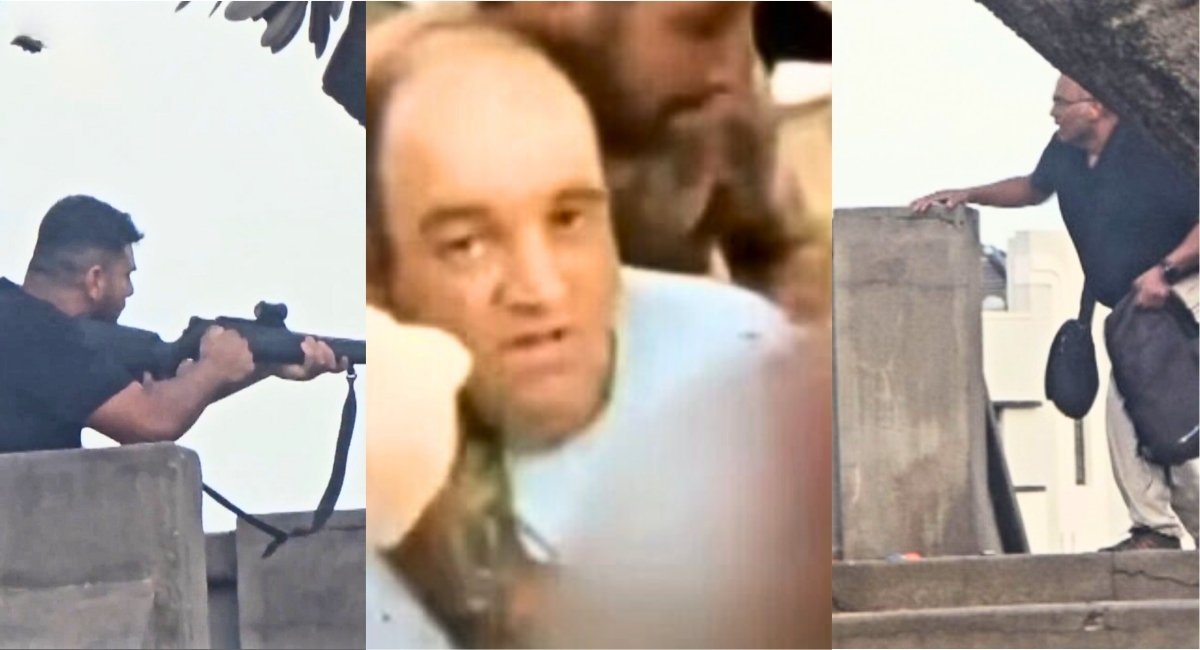
At least 15 people were killed and dozens more injured in a mass shooting on Bondi Beach in Sydney during a Hanukkah celebration, in what authorities have now declared a terrorist attack motivated by antisemitism. The incident — the deadliest in Australia since the 1996 Port Arthur massacre — has prompted national mourning, a renewed push for stricter gun laws, and global condemnation.
Two armed attackers, identified as a father and son duo, opened fire on a crowd gathered for the “Chanukah by the Sea” event on Sunday evening, killing at least 15 civilians and injuring around 40 people. One shooter was killed by police on the scene; the other remains in critical condition under guard. Prime Minister Anthony Albanese described the attack as “pure evil” and explicitly linked it to antisemitism and terrorism as investigations continue.
What Happened: Sequence of the Attack
On the evening of December 14, 2025, crowds had gathered at Bondi Beach in eastern Sydney for the Jewish festival of Hanukkah, a celebration known as Chanukah by the Sea that drew more than 1,000 people including families and community members. Around 6:45 p.m. local time, two gunmen armed with semi-automatic weapons opened fire near Archer Park and Campbell Parade, rapidly turning the festive gathering into a scene of carnage.
Emergency services responded in force as panicked attendees ran for cover. Video and eyewitness accounts show multiple gunshots echoing as people fled the area. Police later declared the incident a terrorist attack, citing the nature of the assault and evidence recovered at the scene.
The Victims: Lives Lost and Injured
The confirmed death toll has risen to 15, with victims ranging from children to elderly adults, and authorities warn the count may change as investigations proceed. Among the deceased were community members, visiting tourists, and religious leaders. Hospitals treated around 40 injured people, some critically, including police officers who were among first responders.
Victims’ ages span from about 10 to 87, illustrating the indiscriminate cruelty of the attack. Officials also reported that several of those wounded were in serious but stable condition.
Suspects Identified: Who Were the Gunmen?
New South Wales Police have identified the assailants as Sajid Akram (50) and his 24-year-old son, Naveed Akram — both of Pakistani origin, according to multiple media and law enforcement sources. The elder Akram was shot dead at the scene by police, while Naveed remains critically injured and under police guard in hospital.
Authorities recovered multiple licensed firearms from their possession, and subsequent searches uncovered improvised explosive devices in a vehicle linked to the attackers, which were safely rendered harmless by bomb squads.
The father held a legal firearms license and was in possession of several registered guns, raising questions about weapon ownership criteria and oversight, especially since at least one suspect had previously drawn police attention without being on any terror watchlists.
Official Responses: Government, Police & World Leaders
Prime Minister Anthony Albanese addressed the nation, calling the shooting an “act of pure evil” and emphasizing that the attack targeted the Jewish community on the first night of Hanukkah. Albanese pledged unity and vowed to do “whatever is necessary to stamp out antisemitism” in Australia.
New South Wales Premier Chris Minns echoed this sentiment, condemning the violence and offering condolences to grieving families. Police Commissioner Mal Lanyon confirmed the incident is being treated as a terrorist attack — a designation that brings federal agencies, including counterterrorism units, into the ongoing investigation.
World leaders, including France’s President Emmanuel Macron, U.S. President Donald Trump, and others, issued statements of solidarity with Australia and the Jewish community, denouncing the attack as extremist violence.
Heroic Acts Amid Horror
In the chaos, acts of bravery emerged. Ahmed al Ahmed, a local Syrian-born shop owner, is widely credited with tackling and disarming one of the gunmen despite sustaining gunshot wounds himself, a moment praised by authorities as life-saving under fire.
Such courageous civilian interventions have become a poignant part of survivor accounts and tributes, underscoring both the terror of the event and the resilience shown by those caught in it.
Gun Law Debate Reignited
The massacre has reignited fierce debate over Australia’s firearm regulations. Though the country’s laws are already among the strictest globally, Prime Minister Albanese and state leaders are signalling movements toward even tougher restrictions — including stricter licensing criteria and potential limits on firearm possession.
The tragedy — the worst mass shooting in Australia since Port Arthur in 1996 — has again brought gun safety policy to the forefront of public discourse, especially given that one attacker was a licensed gun owner with multiple registered weapons.
Community Impact and Security Responses
Jewish communities across Australia and abroad are in mourning, with tributes and memorials held at Bondi Pavilion and synagogues nationwide. Flags have been lowered to half-mast in recognition of the victims.
Police forces across major cities — including in New York and Los Angeles — increased patrols at Hanukkah and other holiday events as a precautionary measure following the Sydney attack, though officials have not reported any specific linked threats overseas.
Conclusion & Editorial Insight
The Bondi Beach Hanukkah attack stands as a searing tragedy: a deliberate act of targeted violence that struck a community celebrating faith and family. The chilling mix of terror, antisemitism, and legal gun access has reignited international conversation about domestic security, community protection, and the limits of preventive law enforcement.
As Australia mourns — and both local and global leaders decry the hate that fuelled this attack — the nation faces a crossroads. Unity, not division, and strengthened safeguards, not complacency, will define the response in the days ahead. The implications stretch far beyond Bondi, challenging societies worldwide to confront the roots of targeted hatred and the mechanisms that allow such violence to reach a public space once dedicated to joy.