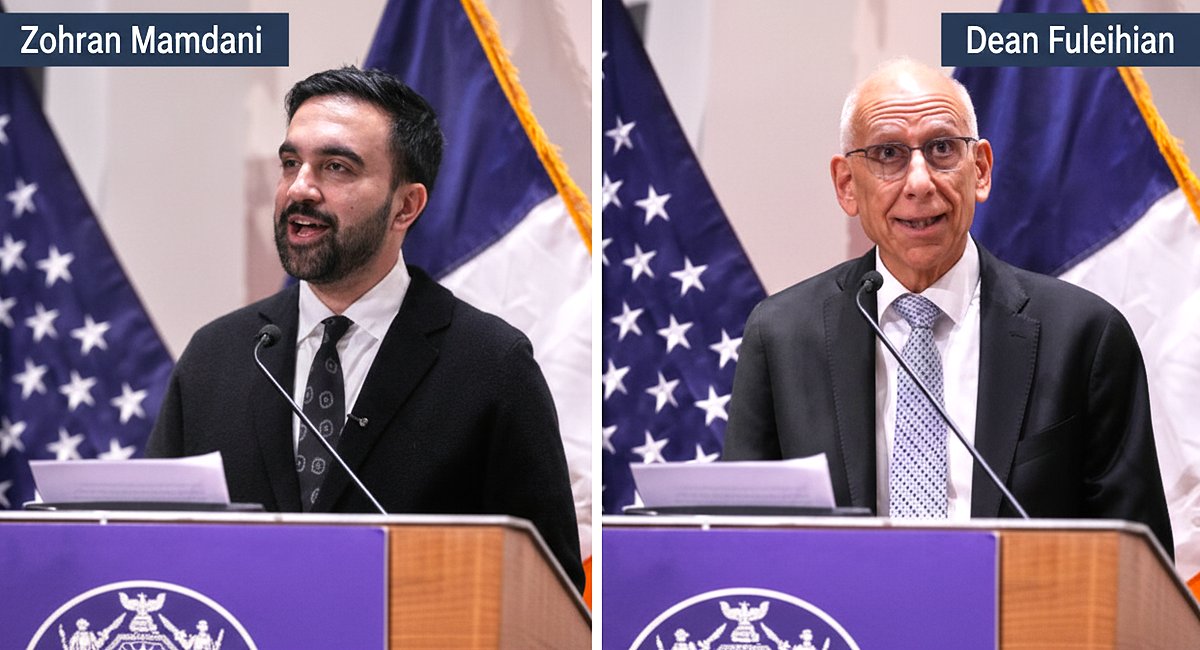
New York City, 13 November 2025 — Mayor‑elect Zohran Mamdani has made two major early announcements as his administration takes shape: the appointment of budget expert Dean Fuleihan as his First Deputy Mayor and the establishment of a high‑profile transition team of five women leaders. These moves signal his intent to deliver on ambitious policy goals, including free child‑care by 2026.
Experienced leadership for a progressive agenda
Mamdani’s selection of Dean Fuleihan brings decades of municipal experience to his incoming administration. Fuleihan previously served as First Deputy Mayor under Bill de Blasio and was New York City’s Director of the Office of Management and Budget. According to Bloomberg, Fuleihan “has served in government for more than 40 years” and is charged with managing the city’s day‑to‑day operations and roughly $120 billion budget.
At the same time, Mamdani announced his transition team, led by five senior women: Lina Khan, Maria Torres‑Springer, Grace Bonilla, Melanie Hartzog and Elana Leopold. They bring experience from city government, federal agencies and nonprofit leadership. According to The Guardian, Mamdani said the all‑female team “will build a City Hall capable of delivering on the promises of this campaign.”
What’s driving the transition and policy priorities
Mamdani has campaigned on an affordability platform—free child care for children aged six weeks to five years, free bus services, city‑run grocery stores, rent freezes and an increased minimum wage. The appointment of Fuleihan and the staffing of the transition team signal a dual strategy: harnessing institutional experience and operational know‑how while advancing a bold reform agenda.
“What we’re doing is building City Hall for working New Yorkers,” Mamdani said at his appointment announcement. “We choose leaders who will deliver on our campaign promises, and we choose them knowing the scale of the challenge.”
Those selected bring strategic strengths: Fuleihan is well‑versed in city budgeting and labor negotiations, while the co‑chairs of the transition team bring deep expertise in housing development, antitrust regulation, nonprofit service delivery and city finance. According to the Wall Street Journal, their membership represents a blend of progressive momentum and governance continuity.
Free child‑care by 2026 and the road ahead
One of Mamdani’s signature promises is universal, no‑cost child care. He has proposed providing free early childhood care from six weeks old and aligning child‑care worker pay with public‑school teachers. According to CBS News, he described the lack of universal child care as having “cost the city’s economy more than $20 billion in the last four years.”
Observation: The policy must navigate fiscal constraints. New York City’s balanced‑budget requirement means new spending must be matched by cuts or new revenue. Analysts caution that while the promise is significant, implementation will depend on cooperation with the state legislature and the governor’s office.
Significance for New Yorkers and City Hall
For residents, the appointments and transition plan matter because they provide a window into how Mamdani intends to govern—and whether he can deliver on high‑impact but high‑cost promises. The blend of veteran bureaucrats and progressive leaders suggests he is positioning for operational stability alongside reform.
For City Hall insiders, the staffing decisions reflect a message: the administration will both respect the mechanics of city government and push for change. Mamdani’s choice of Fuleihan contrasts with the typical move of elevating entirely fresh faces. Critics say this may signal continuity rather than a break from past administrations, while supporters argue it brings needed experience to execute on ambitious policy goals.
What to watch in the coming months
- Budget negotiations & financing: Mamdani must craft a fiscal plan that supports his agenda—especially universal child care—while complying with the state’s budget rules and securing legislative approval.
- Staffing executives & agency heads: The transition team’s work includes recruiting commissioners, deputy mayors, and agency leadership.
- Policy roll‑out timing: Implementation timelines will be key—when will applications open, when will child‑care services expand, and when will city buses become fare‑free?
- Political dynamics: Cooperation with Governor Kathy Hochul and the state legislature will be critical, particularly on revenue and tax changes.
- Measuring delivery: New Yorkers will want to see early signs of policy momentum—not just announcements. The transition team will be judged on execution as much as intent.
Conclusion
These first moves by Mamdani show the contours of his administration: operational competence married to an ambitious progressive agenda. The keyword — Mamdani transition team — underscores how these appointments are not just ceremonial but strategic. With Fuleihan at the helm of day‑to‑day governance and a hand‑picked group of women leaders steering the transition, Mamdani is signalling that change will happen—and he wants it delivered efficiently.
The real test will come in the new year, when mandates like free universal child care, fare‑free buses and rent controls start facing the reality of implementation. For New York City and its 8.5 million residents, the success of the Zohran Mamdani latest appointments may determine whether this moment becomes a historic turning point—or just another election‑cycle promise.