
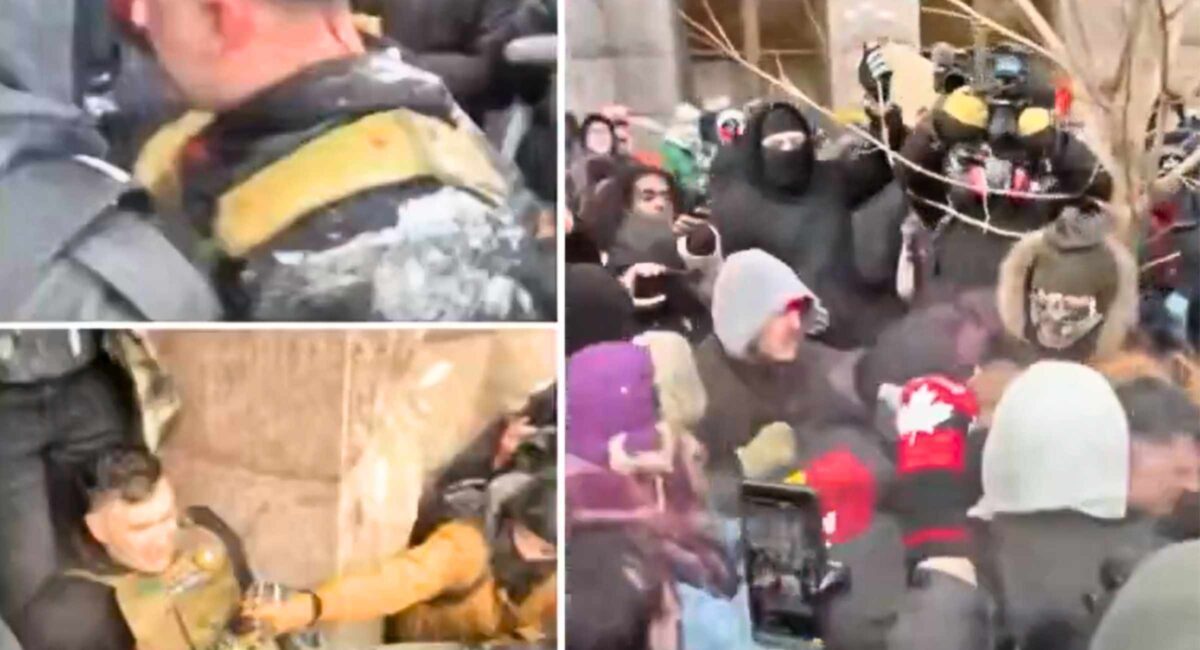
On January 17, 2026, a controversial figure thrust back into the national spotlight — Jake Lang — was forced to abandon a rally in downtown Minneapolis after hundreds of counter-protesters overwhelmed his small group, highlighting not only deep divisions over immigration and Islamophobia in the United States, but also the lingering social and political repercussions of the January 6 Capitol attack and the controversial pardons tied to it.
This article explains who Jake Lang is, what brought him to Minneapolis, why his presence ignited fierce reactions, and how his trajectory reflects a broader set of policy and social tensions gripping the country today.
Jake Lang is a far-right activist and conservative influencer who was pardoned by President Donald Trump for his role in the January 6, 2021, U.S. Capitol attack. He recently organized an anti-Islam, pro-ICE demonstration in Minneapolis that was vastly outnumbered and chased off by counter-protesters amid heightened tensions over federal immigration enforcement in the city.
Who Is Jake Lang? A Profile
Early Activity and January 6 Involvement
Jake Lang is a right-wing activist who first gained notoriety for participating in the January 6, 2021, attack on the U.S. Capitol. According to public records, he was federally charged on multiple counts — including assaulting police officers with a baseball bat and civil disorder — and served roughly four years in custody.
This background is not incidental. It forms the basis of why his presence at a Minneapolis demonstration drew intense media attention and public scrutiny — and why many Minnesotans saw him as a provocateur rather than a grassroots civic actor.
Pardon by President Trump
In 2025, Jake Lang was among those pardoned by President Donald Trump as part of a broad clemency initiative for defendants charged in connection with the January 6 insurrection. The pardon restored certain civil liberties and drew bipartisan criticism from law enforcement officials, lawmakers, and civil liberties advocates concerned about accountability.
Beyond its legal effect, the pardon has had significant reputational implications for Lang — elevating his platform among certain conservative audiences while reinforcing his image to opponents as emblematic of unchecked extremist behavior.
Minneapolis Rally: What Happened and Why It Matter
The Rally’s Aims
Lang arrived in Minneapolis on January 17, 2026, intending to lead a demonstration billed as a pro-ICE (Immigration and Customs Enforcement) and anti-Islam rally, describing it online with inflammatory language. Before the event, Lang posted on social media that he intended provocative actions including threats to burn a Quran — rhetoric denounced by local officials and Muslim community leaders as Islamophobic and dangerous.
His march was also connected to broader national tensions over a Trump administration-mandated surge of federal immigration agents — nearly 3,000 ICE and Border Patrol officers — into the Twin Cities in response to alleged welfare fraud and immigration violations. That surge had already triggered protests, legal challenges, and community outrage following the fatal shooting of a local resident by a federal officer.
Counter-Protests and Overwhelming Public Opposition
What Lang expected to be a demonstration of support for federal immigration enforcement instead became a flashpoint.
- Only a small handful of supporters showed up with Lang, while hundreds of counter-protesters assembled to oppose what they viewed as hate speech and a dangerous incitement to anti-Islamic sentiment.
- Counter-protesters — chanting slogans and wielding signs opposing ICE and racist rhetoric — drove Lang’s group back near City Hall. Some threw water balloons and snowballs in the frigid conditions, forcing his retreat.
- Lang appeared visibly injured as he left, with reports of bruises and scrapes from the chaotic scene as he was chased off the streets.
This rare moment — in which counter-protesters significantly outnumbered and physically pressured a controversial figure — says as much about the mood in Minneapolis as it does about Lang’s tarnished reputation with many locals.
Why Minneapolis? Timing and Context
Immigration Enforcement and Community Tensions
Lang’s rally occurred against the backdrop of a heightened federal immigration crackdown in Minneapolis, where tens of thousands of federal immigration arrests and aggressive tactics had already prompted litigation from local and state authorities.
Minnesota leaders — including the governor and city officials — have criticized the federal sweep as dangerous and counterproductive. The controversy surrounding at-large immigration enforcement provided fertile ground for sharp community reactions to Lang’s presence.
Diverse Demographics and Symbolic Geography
Minneapolis — especially the Cedar-Riverside neighborhood near City Hall — is home to one of the largest Somali Muslim populations in the U.S. This demographic reality gave Lang’s planned rhetoric and location extra symbolic potency, sparking widespread condemnation from community leaders and civil rights groups even before the event unfolded.
Lang’s Rhetoric and Public Persona
Inflammatory Language and Provocation
Lang’s social media presence in the weeks leading to the rally was defined by provocative, inflammatory language, including rhetoric singled out for being anti-immigrant, anti-Islam, and racially divisive. Among his posts were claims that the U.S. was being “replaced” by immigrants and that Christian Americans needed to “stand up” — themes widely criticized across the political spectrum.
Such language amplified fears in Muslim and immigrant communities in Minneapolis and contributed to the ferocity of the opposition he encountered.
Political Ambitions Beyond the Rally
Even before his appearance in Minnesota, Lang’s profile had been rising in conservative circles. In 2026, he was campaigning for a U.S. Senate seat in Florida — a bid seen as a long shot but emblematic of his efforts to translate his activism into electoral politics.
What the Minneapolis Clash Signals About U.S. Politics
Polarization Over Immigration and Public Space
The confrontation reflects how deeply polarized American politics has become, especially around immigration. Federal enforcement operations, community demographics, and the legacy of January 6 have created a combustible mix that turned an event meant to promote one viewpoint into a symbolic repudiation of it.
Far-Right Figures and Public Backlash
Lang’s experience — being widely outnumbered and pushed out by counter-protesters — underscores a broader point: even high-profile right-wing figures can find little support in communities where their messaging is seen as hostile or threatening. Whether in Minneapolis or elsewhere, public attitudes are shaped not only by ideology but lived experience — and in diverse cities, rhetoric perceived as exclusionary often receives swift rebuke.
Conclusion: Jake Lang’s Rally and the Limits of Provocation
Jake Lang’s brief and disruptive appearance in Minneapolis — chased off by counter-protesters amid frozen temperatures and sharp public opposition — serves as a microcosm of America’s ongoing struggles with immigration policy, race and religion, and the political legacy of January 6.
He remains a polarizing figure: pardoned by a former president, active in national political discourse, and now a lightning rod in local community tensions. But in Minneapolis, at least, the public’s response made one thing clear: rhetoric that stokes fear and division can quickly become its own undoing when confronted by the communities it targets.


Pingback: Jake Lang Minneapolis Protest Turns Chaotic