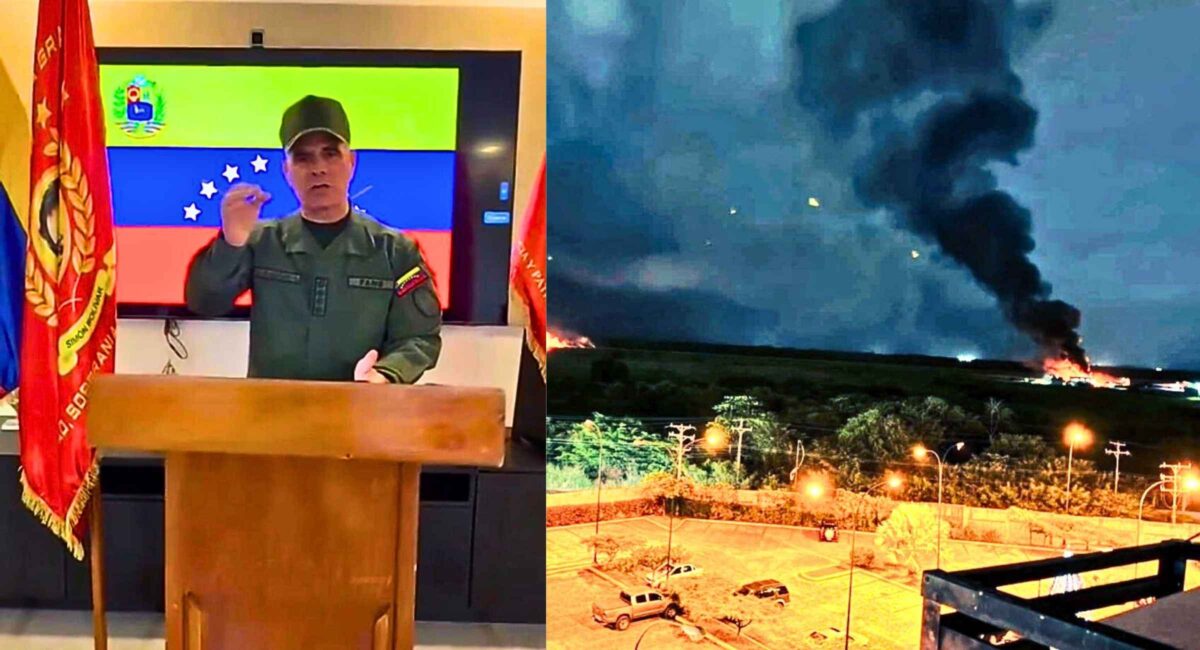
In the immediate aftermath of the U.S. strikes on Venezuela on January 3, 2026, Venezuelan Defense Minister Vladimir Padrino López directly condemned the attacks, characterizing them as a “criminal military aggression” by the United States and a blatant violation of international law and the United Nations Charter. In a public video address shared via state media, Padrino asserted that Venezuela rejects the presence of foreign troops and will not be subdued, stressing that the strikes — including explosions in Caracas and hits on strategic sites like Fuerte Tiuna — were aimed not at “combating drug trafficking” as Washington claimed but at seizing Venezuela’s sovereign resources and undermining its political independence. His message—broadcast amid reports of chaos and a national state of emergency—was emphatic: “They have attacked us, but they will not defeat us.”
Padrino’s response was swift and defiant. He framed the U.S. action as an imperialist assault threatening peace and stability throughout the region, calling on the international community and all multilateral organizations to condemn the United States for what he described as a flagrant breach of Venezuela’s sovereignty and the UN Charter. He also confirmed that Venezuela was compiling information on those injured or killed in the strikes and that all defensive measures were being activated under the nationwide state of emergency declared by President Nicolás Maduro’s government.
In raw, emotional terms, Padrino portrayed the strikes as an existential threat. He warned that attacks had hit not only military targets but also areas with civilian populations, and vowed that the Bolivarian National Armed Forces would mobilize to defend the nation in accordance with constitutional law and international norms. “‘We will use all weapon systems at our disposal for comprehensive defense,’” he said, echoing Maduro’s broader narrative that the U.S. sought regime change and control over Venezuela’s resources.
True to his historical posture during escalating tensions with Washington, Padrino also used the moment to call for unity among Venezuelans. He urged citizens to remain calm but resolute, to support the armed forces, and to demonstrate resilience in the face of what he labeled the “worst aggression” ever directed against Venezuela. His words were meant to galvanize both the military and civilian population to resist what he described as illegitimate foreign intervention and to stand firm behind national leadership and sovereignty.
Despite some early online rumors suggesting otherwise, reports that Padrino himself had been killed in the attacks were proved false, with the minister appearing in video statements and actively coordinating defensive responses. In these messages, he reiterated that Venezuelan forces had been fully deployed and that the country would defend itself under orders from President Maduro, reinforcing the official stance of unyielding resistance.
Padrino’s condemnation reflects a broader Venezuelan government narrative that views the U.S. military action not as narrowly targeted counter-narcotics operations but as direct aggression designed to destabilize the country and dismantle its political structures. This position is shared by other officials who have framed U.S. pressure over the past year — including sanctions, naval blockades, and military positioning in the Caribbean — as part of a sustained attempt to coerce Caracas, rather than as legitimate anti-crime measures.
While his immediate focus has been on rallying internal support and denouncing Washington’s actions to the world, Padrino’s rhetoric also signals that Venezuela’s defense apparatus is preparing for prolonged geopolitical confrontation. By invoking Venezuela’s right to self-defense under Article 51 of the UN Charter, he aimed to place Caracas’s response on a legal footing, even as international opinion remains deeply divided and calls grow for urgent diplomatic engagement to prevent further escalation.
Overall, Vladimir Padrino López’s response to the U.S. strikes was unmistakable in tone and intent: he condemned the attack as unlawful and aggressive, pledged resolute defense of national sovereignty, and called on the Venezuelan people and global institutions to unite against what he described as an imperial assault — all while insisting that Venezuela would resist and ultimately prevail.