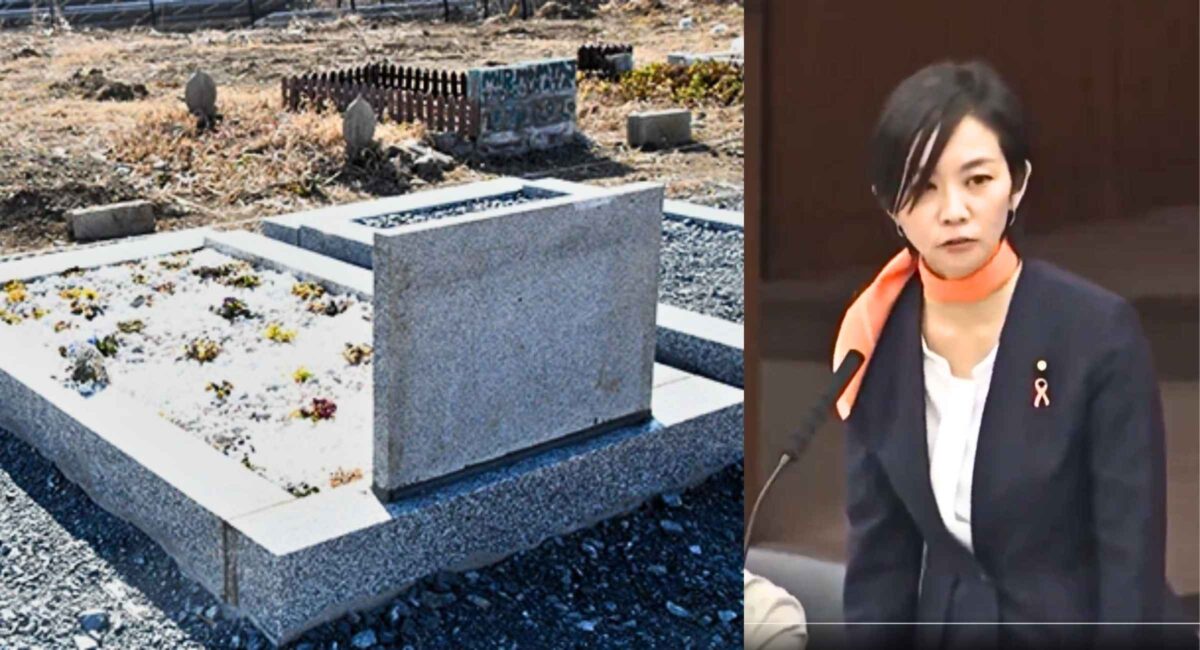
In late 2025, Japanese lawmaker Mizuho Umemura sparked nationwide debate by arguing that Muslims in Japan who wish to avoid cremation should repatriate their remains to their home countries — instead of building new burial grounds — citing Japan’s cremation tradition, very limited land, and public health concerns. Umemura’s remarks thrust the issue of religious burial rights versus cultural norms and practical constraints into the spotlight, drawing both support and criticism from communities across Japan and overseas.
Why This Issue Matters Now
Japan is almost unique among developed countries for its near-universal cremation practice: over 99% of deceased are cremated, a cultural norm deeply rooted in Buddhist and Shinto traditions and reinforced by limited land availability.
But as Japan gradually opens to global migration and a growing Muslim population — estimated at 300,000–350,000 people — questions about funerary rights are no longer theoretical. Unlike cremation, Islam strictly requires burial (ground interment) without burning the body — a tenet observed as sacred and non-negotiable in traditional Islamic law.
In this context, Umemura’s comments have forced a clash between religious freedom and entrenched cultural practices, raising important questions about minority rights, social cohesion, public policy, and the meaning of multiculturalism in an ageing, densely populated nation.
What Umemura Actually Said — The Core of Her Argument
During a committee session late in 2025, Mizuho Umemura, a member of the Sanseito (参政党) party, responded to proposals for expanding Muslim burial sites by emphasizing several points:
- Cremation is deeply embedded in Japanese culture and practiced by the vast majority — a symbol she framed as part of the nation’s cultural heritage.
- Japan’s land constraints and environmental challenges (high humidity, limited space, natural disaster risks) make expanding ground burial sites impractical and potentially unsafe.
- For these reasons, she argued, foreign residents (including Muslims) who do not accept cremation should consider having their remains returned to their countries of origin instead of building new cemeteries in Japan.
While Umemura did not call for legal bans on burial — and Japan’s laws do not formally prohibit ground burial — her stance effectively discourages expanding burial infrastructure for religious reasons, especially Muslim burials.
Japan’s Cremation Tradition — History, Practice, and Practicalities
To understand why burial rights are contentious in Japan, it helps to look at the historical and structural reasons cremation dominates:
Cultural Embeddedness
Cremation isn’t merely a practical choice; it is a cultural norm linked to religious practice and social life. Shinto and Buddhist influences over centuries have shaped a death culture where burning the body and preserving ashes for periodic memorial rites is standard.
Land Scarcity and Public Health Concerns
Japan is one of the world’s most densely populated countries. Cities and agricultural land alike are heavily used, and new ground cemeteries — particularly those that allow traditional Muslim burial rites involving unembalmed bodies — raise public health questions, such as water table integrity and soil stability, according to critics.
Legal Framework
Japanese law permits burial, but local governments exercise considerable control over cemetery space, and most communities have chosen cremation-only cemeteries, creating practical barriers for Muslims who need burial plots.
As a result, there are only about 10 cemeteries nationwide where non-cremation burials occur at all, often limited geographically and capacity constrained.
Muslim Burial Practices and Why Repatriation Is Sensitive
For many Muslims, shiping remains overseas is not a mere logistical issue — it touches on religious obligation, family dignity, and spiritual beliefs about death. Islamic burial rites generally require:
- Body is washed and wrapped, usually without formal embalming.
- Ground burial occurs quickly, often within 24 hours, with body placed in the ground facing Mecca.
- No cremation — burning the body is forbidden in traditional Islamic jurisprudence.
Suggesting repatriation — while legally permissible and often practiced — can appear to some as requiring Muslims to fight their dead to a distant homeland rather than facilitating culturally respectful final rites at the place they lived and contributed.
The Debate: Tradition vs. Inclusivity
Supporters of Umemura’s Position
Proponents of Umemura’s stance (and similar positions in media and political comments) argue:
- Japan’s funerary customs are a core part of its cultural fabric that doesn’t easily change.
- Large-scale cemeteries for burial could strain land use planning, especially in urban regions.
- Complete burial infrastructure for minority religions might open debates about other culturally divergent practices.
Supporters frame their position as asserting national norms, with some voices suggesting that immigrants should adapt to dominant practices if they choose to settle permanently.
Critics and Minority Rights Advocates
Opponents, including Muslim community advocates and some commentators, see this as disrespectful to religious freedom:
- Muslims in Japan have lived, worked, and built lives here — repatriation is expensive and emotionally taxing for families.
- Burial tradition is not a fringe ritual but a recognized religious requirement; forcing cremation would violate core beliefs.
- Opposing new cemeteries without offering alternatives can be viewed as exclusionary or hostile toward diversity.
Religious pluralism advocates often point to successful burial solutions in other countries that accommodate different rites while respecting local customs — suggesting Japan could find balanced solutions.
Public and Political Reactions
Umemura’s remarks ignited a mix of responses:
Public Debate & Social Media Reactions:
- Viral online posts highlighted the strong divide in public opinion, with some praising what they see as “defending tradition,” and others criticizing the comments as insensitive or discriminatory toward Muslims and other minorities.
Within Politics:
- Some politicians have called for formal guidelines that help local governments navigate burial and cremation choices for religious minorities.
- Other lawmakers, like former Foreign Minister Takeshi Iwaya, have publicly opposed exclusionary rhetoric, arguing Japan must adapt its policies as it becomes more multicultural.
Community Leaders:
- Muslim community leaders stress that access to burial according to religious custom is integral to dignity and long-term settlement commitment.
- Others have proposed pilot projects or shared cemeteries as potential compromises.
Policy Implications: Where Japan Stands
Japan’s legal framework does not ban burial, but practical implementation is uneven and highly local. Larger debates are emerging about:
- Whether national guidelines should standardize accommodation for religious burial practices.
- How to allocate scarce land equitably for both local cultural norms and minority rights.
- Whether religious freedom protections under Japan’s constitution require state support for diverse funeral rites.
Conclusion — A National Crossroads on Culture and Diversity
Mizuho Umemura’s suggested policy — that Muslims cremating or repatriating their remains is preferable to expanding burial grounds — crystallizes a broader national conversation:
Japan is at a demographic and cultural inflection point. An ageing population, labour shortages, and increased immigration mean the country must reconcile deep-rooted customs with the lived realities of a more diverse society.
Whether Japan opts for expanded accommodation, localized solutions, or reinforced traditional norms, the debate reflects a larger question: Can a society deeply attached to one cultural practice adapt respectfully without sacrificing its heritage — and without marginalizing those who live within it?
Finding that balance will require policy clarity, intercultural dialogue, and compassionate leadership — not just in parliament, but across communities where life, death, faith, and land converge.