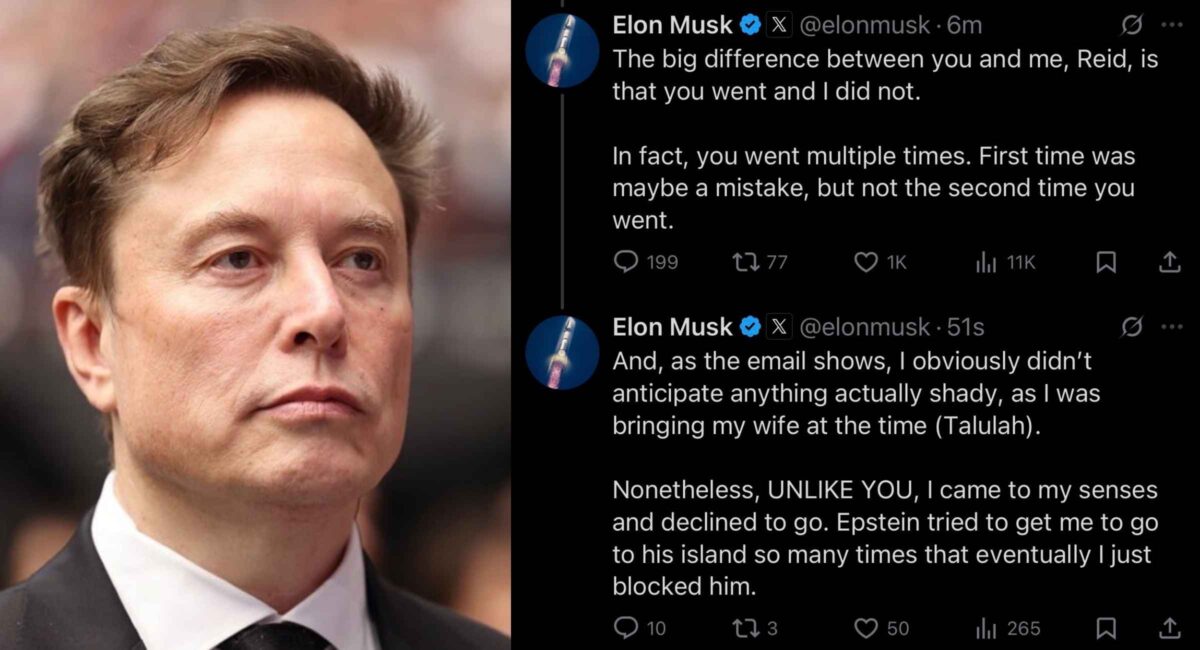
Elon Musk has publicly reaffirmed that he declined invitations from convicted sex offender Jeffrey Epstein to visit his private Caribbean island, Little St. James — even as newly released Department of Justice emails from 2012–2013 show Musk and Epstein discussing potential island visits, helicopter plans and holiday party timing. While the correspondence indicates some engagement about logistics, there’s no verified evidence Musk ever actually visited the island or participated in any criminal activity. Musk has reiterated on social media that he never flew on Epstein’s jet, never attended Epstein’s parties, and has supported full transparency of the Epstein files.
Why This Matters
This isn’t just another celebrity footnote. In early 2026, after the U.S. Department of Justice released millions of pages of previously sealed Jeffrey Epstein documents under a transparency mandate, email exchanges between Musk and Epstein surfaced publicly for the first time. That triggered intense scrutiny — not because there’s evidence of Musk wrongdoing, but because:
- Musk repeatedly stated he refused to visit Epstein’s island.
- The released emails show Musk initiated questions about parties and timing for a visit.
That discrepancy has fueled debate across media, legal analysts, and social platforms. Let’s unpack what’s verified, what isn’t, and why context matters.
Decades of Public Denials vs. New Emails
Early Public Statements
Before the document release, Musk’s public position was consistent:
- He has never visited Epstein’s island or flown on Epstein’s plane.
- He’s described Epstein as a “creepy” individual and has emphasized his lack of involvement in Epstein’s criminal activities.
In fact, in 2025 Musk posted on X (formerly Twitter) that Epstein “tried to get me to go to his island and I REFUSED.”
What the Newly Released Emails Show
According to verified reporting on the DOJ’s official files:
2012 Correspondence
- In November 2012, Musk responded to an email about helicopter travel to Little St. James, saying it would likely be just him and his then-partner if they were to visit.
- In another exchange, he asked, “What day/night will be the wildest party on your island?” — precisely the sort of casual social inquiry that has sparked headlines.
2013 Correspondence
- Musk wrote to Epstein that he would be in the British Virgin Islands/St. Barth’s area over the holidays and asked if there was a good time to visit the island.
Critically, there’s no email in the disclosed files confirming that Musk ever actually made the trip. The exchanges include planning and scheduling inquiries — not confirmations of attendance — and no flight or visit logs definitively place him on Little St. James.
Musk’s Reaffirmation and Denials
In response to the new files, Musk has reiterated multiple points on social media platforms:
- He supported the release of Epstein files knowing his name would appear.
- He has never attended Epstein’s parties or flown on his private jet (the so-called “Lolita Express”).
- He frames his involvement as minimal correspondence that could be misinterpreted by detractors.
These reaffirmations are consistent with his long-standing denials. Importantly, no legal accusation has been made against Musk in connection with Epstein’s crimes based on the currently released documents. The DOJ has not alleged wrongdoing by Musk.
Parsing the Discrepancy: Inquiry vs. Refusal
From a journalistic standpoint, here’s the nuanced reality:
Musk asked about logistics and social events
Emails show Musk asking about island visits and party timing — language that, taken at face value, reflects interest in attending.
Musk has consistently denied attending
Despite the inquiries, Musk maintains he never attended nor followed through with any visit.
These two can coexist if the plans never materialized. Plans and inquiries don’t equal participation.
Legal and Ethical Context
There’s a critical distinction between correspondence about a possible meetup and participation in illicit activity:
- The DOJ release includes email communications, not evidence of criminal conduct.
- Courts and prosecutors treat an email inquiry differently from attendance or complicity.
- No official charges against Musk have been filed in connection with Epstein.
Epstein’s island is notorious because it was the scene of criminal abuse documented by victims and prosecutors — but communication with Epstein alone, especially about logistics, is not evidence of guilt.
Public and Media Reaction
The release of these emails ignited widespread commentary:
- Some headlines framed the discovery as contradictory to Musk’s denials.
- Others emphasized that inquiries without action don’t amount to wrongdoing.
- Analysts point out that famous figures’ names often generate simplified narratives online that omit nuance.
It’s worth emphasizing: public discourse around high-profile figures can quickly move from fact to speculation. In this case, careful fact-checking shows commentary that Musk “lied” may be overstated, because the question hinges on whether planned inquiries, rather than actual visits, constitute refusal or acceptance.
What Still Isn’t Known
Even with millions of pages released, key gaps remain:
- There’s no flight log or photo evidence confirming Musk ever set foot on Epstein’s island.
- Some emails hint at plans that didn’t materialize — but the files don’t show follow-through.
- Both sides (critics and defenders) have room to interpret the correspondence differently.
Until more definitive documentation appears, the story in the public record remains: Musk inquired, but did not visit.
Conclusion: Reaffirmation With Caution
In my experience covering both high-profile legal disclosures and tech-world narratives, it’s common for clarification and context to lag behind raw document dumps. The newly released DOJ emails add texture to Elon Musk’s past interactions with Jeffrey Epstein, but they do not, on their own, substantiate claims of wrongdoing or attendance at illicit gatherings.
Musk has reaffirmed he did not attend Epstein’s infamous island and did not engage in any criminal behavior associated with Epstein’s network. The emails confirm dialogue, not deeds — and in legal terms, the distinction is crucial.
As more documents are reviewed, expect scrutiny to continue — but for now, the verified facts point to interest and inquiry, not action or participation.